You are hereScience & Technology
Science & Technology
World first. Ever-restless ocean wave farm generates electricity for 1,500 homes on shore: Pelamis in Portugal

(quote)
Three red snakelike devices bobbing in the waves three miles (4.8 kilometers) off the coast of Agucadoura, Portugal, represent the first swell of what developers hope will be a rising tide of wave power projects. These big metallic sea snakes bobbing in the ever-restless waves of the North Atlantic are generating electricity for over a thousand homes on shore. The world’s most ambitious, working wave farm for generating electricity, it is part of Portugal’s national effort to become energy self-sufficient as Denmark has done since the 1970s oil crisis. Portugal is not a wealthy nation and has no coal or petroleum. So wind and water and sunshine are their favored sources of energy. Portugal is also one nation encouraging local cities to become zero emission communities.


Work of art: house with natural light. Intensely green: sunflower husk wall panels, solar heating, recycled water for garden

(quote)
Thomas Small is an accomplished cook, so it’s important for him to try new and exotic ingredients every now and then. When it came to the construction of his eco-friendly house, that’s exactly what his architects gave him. After all, crushed sunflower husks and shredded blue jeans don’t sound like typical building blocks. But in the world of green design, such ingredients are not rare. So now, Mr. Small and his wife, Joanna Brody, along with their two very young children and a pair of large French Briard dogs, share a prefabricated urban building that has become an example for others looking for creative ways to go green.

Nature provides. A tree fungus could provide green fuel that can be pumped directly into vehicle tanks: Patagonian rainforest

(quote)
A tree fungus could provide green fuel that can be pumped directly into vehicle tanks, US scientists say. The organism, found in the Patagonian rainforest, naturally produces a mixture of chemicals that is remarkably similar to diesel. "These are the first organisms that have been found that make many of the ingredients of diesel," said Professor Gary Strobel from Montana State University. "This is a major discovery."
The discovery may offer an alternative to fossil fuels, said Strobel, MSU professor of plant sciences and plant pathology, who travels the world looking for exotic plants that may contain beneficial microbes. The find is even bigger, he said, than his 1993 discovery of fungus that contained the anticancer drug taxol. The fungus, called Gliocladium roseum and discovered growing inside the ulmo tree (Eucryphia cordifolia) in northern Patagonia, produces a range of hydrocarbon molecules that are virtually identical to the fuel-grade compounds in existing fossil fuels.

Aircraft & spacecraft once swiftest or slowest, graceful or ungainly, at standstill as if plucked from sky: Air and Space Museum

(quote)
The first thing visitors encounter in the main display area of the Udvar-Hazy Center, the National Air and Space Museum annex near Dulles airport in the Virginia countryside, is a huge black spy plane. It’s an SR-71A Blackbird, the ultimate hot-rod aircraft, one of about 30 built at the Lockheed Skunk Works in California in the 1960s. This one last flew in 1990, traveling the 2,300 miles between Los Angeles and Washington in 1 hour 4 minutes 20 seconds - a transcontinental blur.
But now it’s at a standstill, giving visitors the chance to appreciate its outrageousness. There are the two massive engines on short, stubby wings; the tiny cockpit where the two-man crew was shoehorned in wearing bulky pressure suits; and the sweeping titanium fuselage that was built so loosely, to allow for expansion in the heat of supersonic flight, that the fuel tanks that made up the bulk of the plane routinely leaked, losing as much as 600 pounds of fuel taxiing to the runway.

Newspapers' future: news-paperless, or newspaper-less? Century-old Christian Science Monitor ends daily print, goes online

(quote)
The century-old Christian Science Monitor announced Tuesday that it will become the first nationally distributed newspaper to stop publishing a daily print edition, and focus on publishing online, succumbing to the financial pressure squeezing its industry harder than ever. The Boston-based paper is not forsaking print altogether - it will offer a weekly print version in addition to daily e-mail editions - but editors acknowledged shifting the focus to CSMonitor.com will save millions in addition to widening its audience.
The Boston-based general-interest paper, winner of seven Pulitzer Prizes, has long since established an extraordinary reputation for high-quality journalism. It was founded a century ago in 1908 by a religious visionary, Mary Baker Eddy, who "discovered" Christian Science and founded the paper in response to critical coverage of her in the New York World. She declared in the first edition that the role of the paper would be to "injure no man, but bless all mankind."

"Every doctor will allow a colleague to decimate a whole countryside sooner than..." - Bernard Shaw
Every doctor will allow a colleague to decimate a whole countryside sooner than violate the bond of professional etiquette by giving him away.
A greenhouse gas 17000 times more potent than CO2: NF3 gas used in making flat panel TVs, computer displays, microcircuits
(quote)
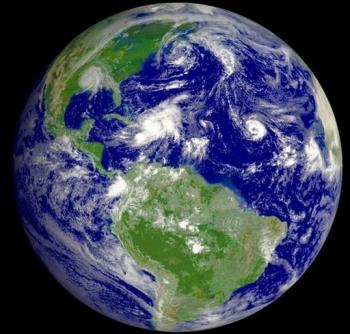
A gas used in manufacture of flat panel televisions, computer displays, microcircuits, and thin-film solar panels is 17,000 times more potent a greenhouse gas than carbon dioxide, and it is four times more prevalent in the atmosphere than previously estimated, according to a study released Thursday. Researchers using a new NASA-funded measurement network discovered there was 4,200 metric tons of the gas nitrogen trifluoride in the atmosphere in 2006, not 1,200 tons as previously estimated for that year.
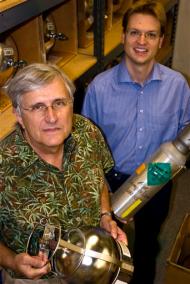
In 2008 there are 5,400 metric tons of the gas in the atmosphere, an average of an 11 percent tonnage increase per year, said Ray Weiss, head of the research team from the Scripps Institution of Oceanography in La Jolla, California. Nitrogen trifluoride, which could not be detected in the atmosphere using previous techniques, is 17,000 times more potent as a global warming agent than a similar mass of CO2. The rate of increase means that about 16 percent of the amount of the gas produced globally is being emitted into the atmosphere, the researchers estimate.
Contact Us

RSS feed


