You are hereScience & Technology
Science & Technology
All-electric car, 240+ miles per charge, 0 to 60 mph in under six seconds, to be built in San Jose Tesla factory
(quote)
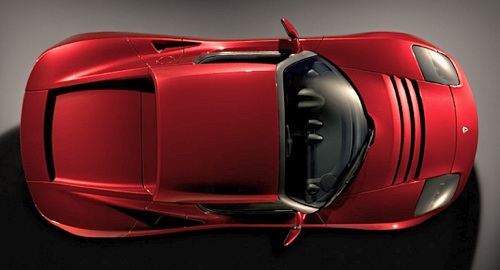
The specs for Tesla Motor's new car are in: an all-electric, four-door, five-seat sedan that gets in excess of 240 miles per charge and accelerates from 0 to 60 mph in under six seconds. It will be built in what the company is calling the "greenest auto manufacturing plant in the world" on the outskirts of San Jose, Calif., the self-proclaimed world headquarters of clean technology. In other words, the car of the future is on its way here. Eventually.
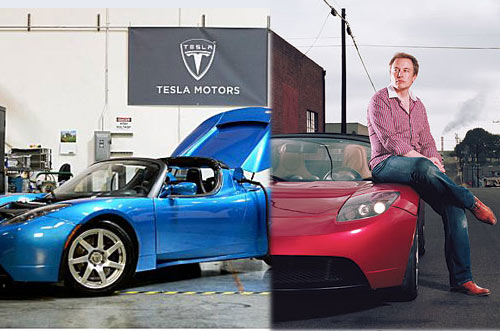
Winning a $250m (£139m) deal with electric car maker Tesla to base its new factory there, the city beat other contenders to secure a project that will bring more than 1,000 jobs to the area. "This is a big step toward being the center of world cleantech innovation," said San Jose Mayor Chuck Reed. Tesla boss Ze'ev Drori said that "this is proof the time has come for the electric car."

The company plans to produce an all-electric luxury sedan, called the Model S, at the plant with a retail price of around $60,000 (£33,000.) It already manufactures a two seater zero emission Roadster which sells for $109,000 (£61,000) and is built by Lotus in England. read more »


World first fuel-saving carbon-cutting program: Air New Zealand passengers take a ride on the 'perfect flight'

(quote)
Air New Zealand's "perfect flight" using optimal flying conditions and the co-operation of US, New Zealand and Australian aviation authorities, was hailed as a success in San Francisco on Friday. Using new technologies and procedures on a flight from Auckland, Air New Zealand cut waiting time, trimmed flying time, saved 1,200 gallons of fuel (around 4% less fuel than normally used), eliminated 30,000 pounds of harmful carbon emissions and took a quieter approach on arrival at San Francisco International Airport.

The normal commercial flight NZ8, dubbed ASPIRE 1 (Asia and South Pacific Initiative to Reduce Emissions) is the first tailored test flight on the Pacific using technology and cleared gates at each end, eliminating air traffic congestion to test flight and fuel efficiency. It is part of a worldwide drive to make the aviation industry more environmentally friendly. read more »
Biggest physics experiment in history underway: Large Hadron Collider passes operational test, fires first beam
(quote)
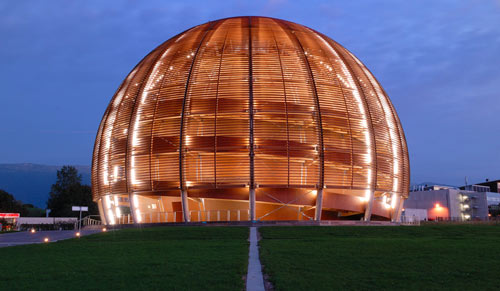
There was screaming and whistling in physics labs and auditoriums outside Geneva - and around the world - Wednesday, as scientists whooped it up out of sheer joy.

Electric tank-car of the future? The Hinterland 1 Concept Car - an electric minivan with Prius-like aerodynamics
(quote)
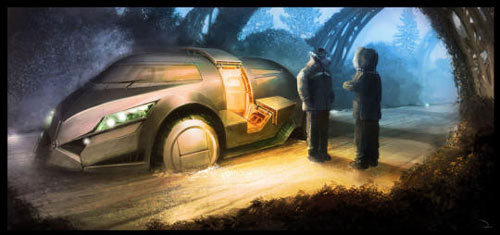
It has the profile of a Toyota Prius interpreted by the late Maxime Faget, designer of the Space Shuttle. It's the Hinterland 1, a conceptual all-electric minivan with a drag coefficient of less than 0.25 (the Prius's is 0.26). And if its designers get their way, it'll become a Canadian icon on par with the CN Tower, Geddy Lee and Poutine. Existing purely as sketches, renderings, and specs at this point, the Hinterland 1 electric car looks like one part tank, one part VW bus with a pinch of bullet train added for flavor.
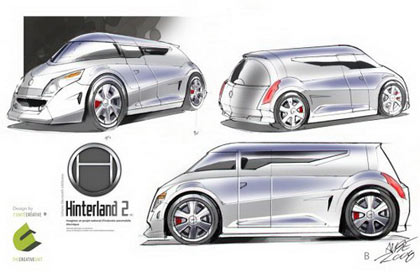
Chief designer of the Hinterland 1 is Matin Aube of Creative Unit, a veteran of Québec- based Bombardier Recreational Products, maker of the Sea-Doo watercraft, who says the project "combines sources of artistic, technical and scientific expertise" from recreational vehicles, electric motors and batteries, aeronautics, aluminium, plastics processing and video games. In theory, the sculpted body would comprise an aeronautical-style aluminum monocoque, fashioned by the same hydroforming process GM uses to create body panels for its curvy Pontiac Solstice roadster. A drive system proposed by electric-car startup Higgins-Aubé would involve a 43 kW-max motor (14kW continuous) powered by Li-ion or Zebra (Sodium Nickel Chloride) batteries with a maximum power of 37,000 kilowatts. Designers envision two models built on the same platform, a two-seater "Mini" and the six-person "Van." read more »
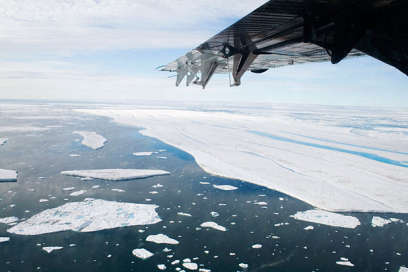
Irreversible loss: 4,500-year-old 19-square-mile ice shelf breaks away in Canada, 10x loss expected this summer

(quote)
TORONTO, Ontario (AP) -- A chunk of ice shelf nearly the size of Manhattan has broken away from Ellesmere Island in Canada's northern Arctic, another dramatic indication of how warmer temperatures are changing the polar frontier, scientists said Wednesday.
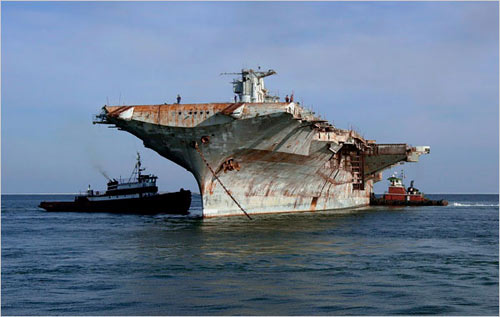
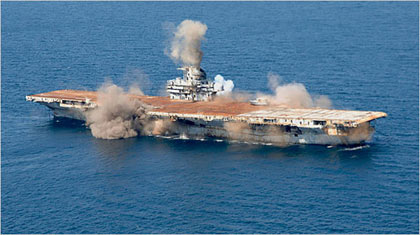
Warship now a home for fish: U.S.S. Oriskany, The Great Carrier Reef, is largest vessel ever sunk to make a reef
(quote)
PENSACOLA, Fla. - For Thom Dietmeyer, a retired naval officer, standing again on the bridge of his old ship was a dream come true, even if he was 70 feet below the surface of the ocean. “I knew exactly where I was going as soon as I got down there,” he said, recalling the dive, which took place a year ago last May on the wreck of an aircraft carrier called the Oriskany. The U.S.S. Oriskany, known as the Mighty-O, was commissioned in 1950 and served in Korea and Vietnam. The ship was sunk by the Navy in May 2006 under a pilot program to convert decommissioned vessels into artificial reefs. At 44,000 tons, 888-foot-long, it is by far the largest vessel ever sunk to make a reef.
New contender in the browser wars: Google to launch open source web browser Chrome on Tues., takes on Microsoft

(quote)
Google is launching an open source web browser to compete with Internet Explorer and Firefox. The browser is designed to be lightweight and fast, and to cope with the next generation of web applications that rely on graphics and multimedia.
Called Chrome, it will launch as a beta for Windows machines in 100 countries, with Mac and Linux versions to come. "We realised... we needed to completely rethink the browser," said Google's Sundar Pichai in a blog post. The new browser will help Google take advantage of developments it is pushing online in rich web applications that are challenging traditional desktop programs. Chrome will be an open-source product, meaning anyone can modify the software code and add features.
Google has a suite of web apps, such as Documents, Picasa and Maps which offer functionality that is beginning to replace offline software. "What we really needed was not just a browser, but also a modern platform for web pages and applications, and that's what we set out to build," Mr Pichai, VP Product Management, wrote.

Contact Us

RSS feed


