You are hereBlogs / WcP.Story.Teller's blog / Tribute to Verplanck Colvin, pioneer to protect Nature; David McClure: Forever Wild statute of 1885; & Wilderness Act of 1964...
Tribute to Verplanck Colvin, pioneer to protect Nature; David McClure: Forever Wild statute of 1885; & Wilderness Act of 1964...

(quote)
"Unless the region be preserved essentially in its present wilderness condition, the ruthless burning and destruction of the forest will slowly, year after year, creep onward… and vast areas of naked rock, arid sand, and gravel will alone remain to receive the bounty of the clouds and be unable to retain it." - Verplanck Colvin, pioneer in environmental protection. The ‘Forever Wild’ Amendment was proposed by David McClure. This visionary accomplishment was the inspiration for those who drafted the 1964 Wilderness Act establishing the National Wilderness Preservation System.
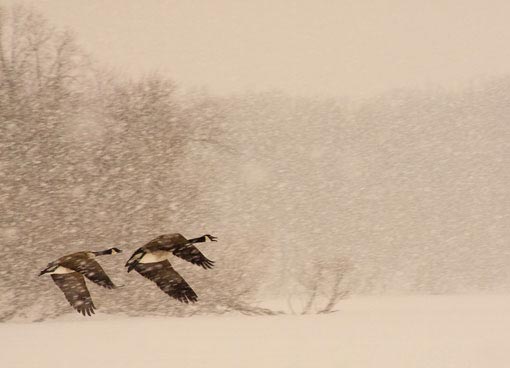
Wilderness Act The Wilderness Act, signed into law on September 3, 1964, is well known for its succinct and poetic definition of wilderness: "A wilderness, in contrast with those areas where man and his own works dominate the landscape, is hereby recognized as an area where the earth and community of life are untrammeled by man, where man himself is a visitor who does not remain." The Wilderness Act of 1964 is the result of a long effort to protect federal wilderness, written by Howard Zahniser (1906-1964) of The Wilderness Society. It created the legal definition of wilderness in the United States, and protected some 9 million acres (36,000 km²) of federal land.
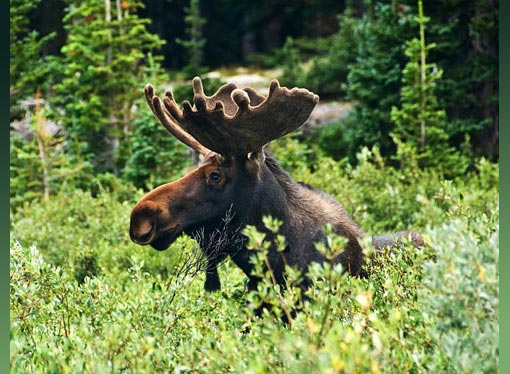
Leaders in the Environmental Movement "Unless the region be preserved essentially in its present wilderness condition, the ruthless burning and destruction of the forest will slowly, year after year, creep onward… and vast areas of naked rock, arid sand, and gravel will alone remain to receive the bounty of the clouds and be unable to retain it." - Verplanck Colvin, pioneer in the environmental movement
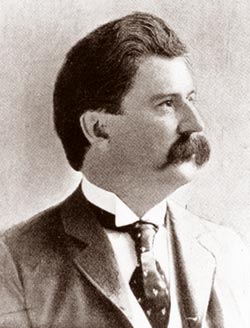
"We must not only protect the wilderness from commercial exploitation. We must also see that we do not ourselves destroy its wilderness character in our own management programs. We must remember always that the essential quality of the wilderness is its wildness." ... the Forest Preserve is "a brilliant and noble concept." - Howard Zahniser, author of Wilderness Act
'A study of the history of the Forest Preserve makes it clear that we may expect attacks on the Forest Preserve by commercial interests from time to time. It is our intention to be prepared for such attacks at all times; if we are, many otherwise serious issues can be discouraged before they have made too much headway.' Statement in 1963 by Paul Schaefer
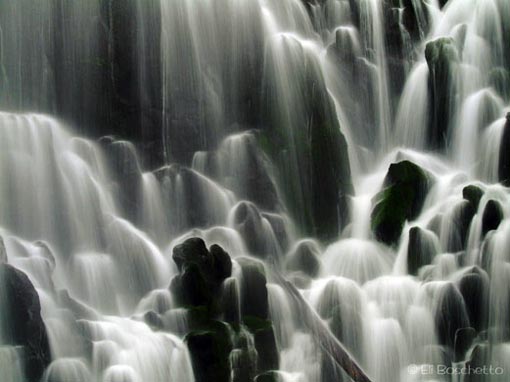
Verplanck Colvin Verplanck Colvin (1847–1920) was a lawyer, author, illustrator and topographical engineer whose understanding and appreciation for the environment of the Adirondack Mountains led to the creation of New York's Forest Preserve and the Adirondack Park. In 1865, when Colvin was 18, Alfred Billings Street gave him a copy of his 1860 book, Woods and Waters, about his adventures in the Adirondack Mountains. By 1869, he had formed the idea of doing a geological survey of the Adirondack region. To gain experience, he recruited friend Miles Blake for a trip to nearby the Helderberg Mountain; he wrote an illustrated report of the trip that was published in Harpers New Monthly Magazine, a national publication.
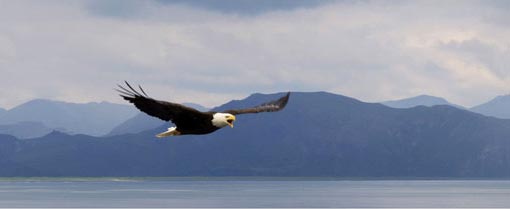
During the summer of 1869 he climbed Mount Marcy, and in 1870 made the 1st recorded ascent of Seward Mountain. During the ascent of Seward, Colvin saw the extensive damage being done by lumbermen in the Adirondacks. His report of the climb was read at the Albany Institute, where it garnered the attention of state officials, and was printed in the annual report of the New York State Museum of Natural History. In it, he tied clear-cutting of Adirondack forests to reduced water flow in the state's canals and rivers, an idea that had first appeared in George Perkins Marsh's Man and Nature, published in 1864.
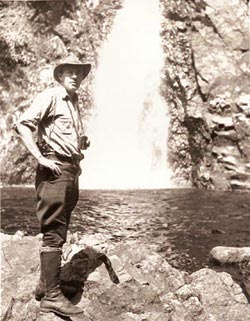
In 1872 he applied to the New York for a stipend to cover the costs of a survey; he was subsequently named to the newly created post of Superintendent of the Adirondack Survey and given a $1000 budget by the state legislature to institute a survey of the Adirondacks. He proved to be an able administrator, managing crews of up to 100 men separated by difficult terrain with only primitive communication methods. He also designed and built many of the tools needed for the job, including a folding canvas boat, and a wind powered spinning reflector to enable precise sighting of a mountain top from many miles away.
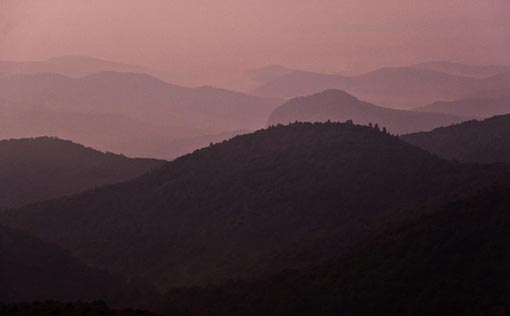
During the first year he discovered Lake Tear-of-the-Clouds, the source of the Hudson river. He directed surveying parties throughout the Adirondacks and determined the altitudes of most of the highest peaks. Determined to fix the precise altitude of Mount Marcy (having decided that the barometric method of determining altitude was insufficiently accurate) he ran a series of eight hundred chains and levels over forty miles long from Lake Champlain to Marcy, each intermediate altitude being calculated to one thousandth of an inch. As the crew approached the summit of Marcy, they encountered an October snow storm with ice and freezing rain; despite urging by his guides and assistants to wait for better weather, Colvin pushed on despite the danger of becoming trapped in Panther Gorge.

In 1873 he wrote a report arguing that if the Adirondack watershed was allowed to deteriorate, it would threaten the viability of the Erie Canal, which was then vital to New York's economy, and that the entire Adirondack region should therefore be protected by the creation of a state forest preserve. He was subsequently appointed superintendent of the New York state land survey, which led to the creation of the Adirondack Forest Preserve in 1885. His work ended in 1900 when then Governor Theodore Roosevelt transferred his duties to the state engineer.
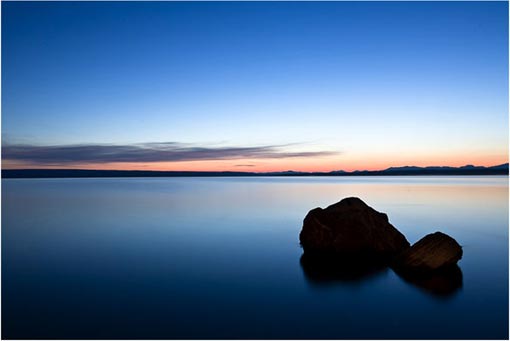
He was a member of numerous scientific societies and was president of the department of physical science at the Albany Institute. In about 1881, at Hamilton College, he delivered a series of lectures of geodesy, surveying, and topographical engineering. His maps, reports, illustrations and notes form a large part of the archives of the New York State Department of Environmental Conservation in Albany and are often referred to by present day surveyors.
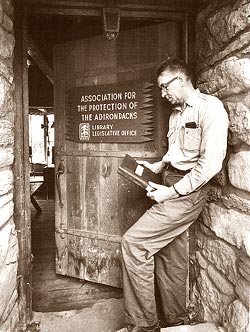
the Association for the Protection of the Adirondacks
Founded in 1901, the Association for the Protection of the Adirondacks was the first citizen based organization formed to protect the Adirondack region for the enduring benefit of present and future generations. Today, the Association fights to maintain the wild character of the Park, helps shape laws and policies that affect the region and serves as the leading source of information about Adirondack conservation. With virtual offices in four Adirondack communities and its Center for the Forest Preserve, The Association for the Protection of the Adirondacks has a strong Park and regional presence: four full-time staff, three part-time staff, a Board of Trustees and committees.
New York's Forest Reserve
Adirondack Park
(unquote)
Photos courtesy of William Hacker / The Wilderness Society, Jason K. Bach / The Wilderness Society, Eli Boschetto / The Wilderness Society, Buzz Hoffman / The Wilderness Society, Paul Schaefer, mherring / The Wilderness Society, deel34 / The Wilderness Society, ruf_d / The Wilderness Society, Association for the Protection of the Adirondacks, and Wikipedia
Original Source: Association for the Protection of the Adirondacks, The Guardian, and Wikipedia


Contact Us

RSS feed



The Open Neighbourhoods organizationhttps://www.voltageriver.com/"> Residential Solar Los Angeles in Los Angeles has organized another group purchase.
the Los Angeles News Group.
Thanks