You are hereBlogs / WcP.Life.Coach's blog / Fashion, health & beauty in real life get along? Spain banned skinny models in 2006. So does Germany's Brigitte
Fashion, health & beauty in real life get along? Spain banned skinny models in 2006. So does Germany's Brigitte

(quote)
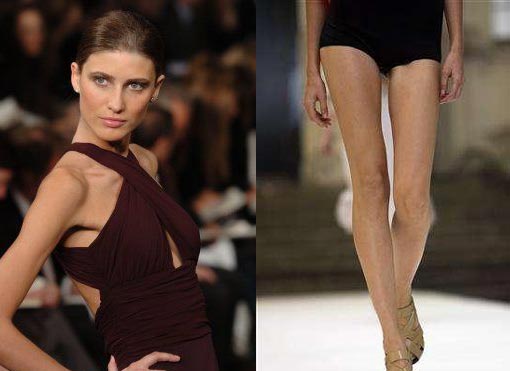
It’s nice to see that Spain is living up to its promise to make sure that the younger generation of Spanish women not kill themselves in an attempt to be thin. Five skinny models kicked out of Spain’s Cibeles. One of the rejected models had only reached a ratio of 16, the equivalent of being 5 feet 10 inches tall and weighing less than 110 pounds, said Dr. Susana Monereo, of Madrid Getafe hospital’s endocrinology and nutrition department, who along with two other doctors was in charge of assessing the models.

Spain Launches Movement Against Skinny Fashion Models
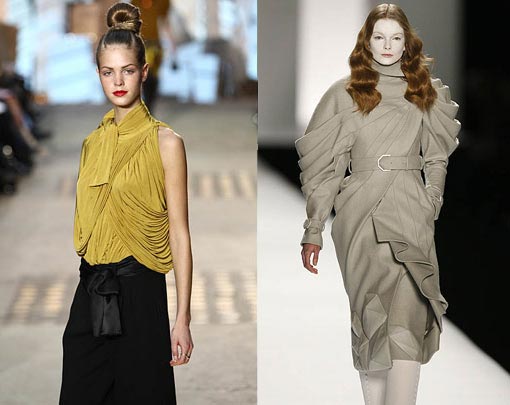
When the Spanish capital Madrid decided to replace the thin beauty ideal with that of curvy "real" women, it was the kind of move that millions of women around the world appeared to have silently waited for. Madrid's measures to ban very skinny fashion models and to promote healthy images of beauty and eating habits have sparked widespread international interest, a spokesman for the regional government says. "Media from as far as South Korea, Australia, the US and Argentina have contacted us," the spokesman told the DPA. A decision by Madrid's top fashion show to exclude very thin models has been imitated by shows in Milan, London, New York and the Spanish cities of Barcelona and Valencia, though they have not adopted rules as strict as those in Madrid, he explained.
"We are pioneers" in what is evolving into an international movement, the spokesman says. The first step was taken by the Pasarela Cibeles, Madrid's top fashion show in September. The show excluded five would-be models for being too thin, setting the minimum body mass index - calculated on a height-weight ratio - for models at 18.
A model measuring 1.75 metres, for instance, must thus weigh at least 56 kg. That corresponds to the minimum level set by the World Health Organization (WHO) for a person to be considered healthy. The Pasarela Cibeles repeated the move in February. A very slim person was likelier to develop diseases, nutrition expert Susana Monereo said on announcing the exclusion of five models.

Ralph Lauren Apologizes For Image Of Emaciated Model: "We Are Responsible"
A spokesman for Ralph Lauren said: 'For over 42 years, we have built a brand based on quality and integrity.
'After further investigation, we have learned that we are responsible for the poor imaging and retouching that resulted in a very distorted image of a woman's body. 'We have addressed the problem and going forward will take every precaution to ensure that the calibre of our artwork represents our brand appropriately.'
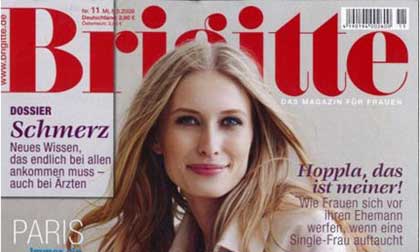
Brigitte, Germany's most popular women's mag, bans professional models
German magazine Brigitte wants to feature more images of 'real life' women.
Germany's most popular women's magazine is banning professional models from its pages and replacing them with images of "real life" women instead. In what is seen as the latest attempt to stamp out the "size zero" model, the editors of Brigitte said it would in future only use women with "normal figures".
"From 2010 we will not work with professional models any more," said Andreas Lebert, editor-in-chief, adding that he was "fed up" with having to retouch pictures of underweight models who bore no resemblance to ordinary women. For years we've had to use Photoshop to fatten the girls up," he said. "Especially their thighs, and decolletage. But this is disturbing and perverse and what has it got to do with our real reader?"

He said the move was a response to complaints by readers who said they had no connection with the women depicted in fashion features and "no longer wanted to see protruding bones".
"Today's models weigh around 23% less than normal women," Lebert said. "The whole model industry is anorexic."
Brigitte, which is Germany's best-selling women's title with more than 700,000 copies, offers readers a familiar diet of fitness, lifestyle, recipes and sex, which tends to appeal to upwardly mobile younger career women.

Lebert said the magazine would call on German women to put themselves forward as models for fashion and makeup articles. "We're looking for women who have their own identity, whether it be the 18-year-old A-level student, the company chairwoman, the musician, or the footballer," he said, adding that he wanted a mix between prominent and completely unknown women and would look out for politicians and actresses interested in modeling.
Critics accused Brigitte of seeking a cost-cutting strategy at a time of declining magazine sales, and of dressing it up as a campaign issue to attract new readers, but Lebert insisted the "ordinary women" would be paid the same amounts that the magazine would otherwise pay model agencies.
No one has yet been signed up for the new initiative, but Lebert is thought to be scouting around. He will undoubtedly extend an invitation to Chancellor Angela Merkel. While her fashion sense has sometimes been questioned, she makes headlines each year with her eye-catching choices of ballgowns at the annual Wagner festival in Bayreuth, and she recently had a Barbie doll modeled after her. Other figureheads might include arguably the most successful female tennis player of all time, Steffi Graf, or the country's popular family minister, mother of seven, Ursula von der Leyen.

German commentators said that Brigitte's move had clearly been inspired by British Vogue editor Alexandra Shulman's recent appeal to major fashion houses to end the "size-zero" culture.
Two years ago Spain introduced a law banning models who were "too thin" from the catwalks.
Model agencies reacted with scepticism to the Brigitte plan. Louisa von Minckwitz, owner of Louisa Models in Munich and Hamburg, where models have to be "size 36 (UK size 10), tending towards size 34 (UK size 8)", said she understood the rage about underweight models but doubted that readers really wanted to buy a magazine to look at ordinary women. "The fact is that women want to see clothes on beautiful, aesthetically pleasing people," she said.

Size zero debate
• In 2006 the fashion world was rocked after a string of models, including Uruguayan sisters Luisel and Eliana Ramos, died after extreme dieting. The Council of Fashion Designers of America recommended that runway models be aged over 16, Spain banned models weighing less than 8st 11lb from Madrid's Fashion Week and Italy banned stick-thin women from Milan's fashion shows.
• In January 2007, Spanish shop window dummies were increased to size 10 following an agreement between Spanish retail chains such as Zara and Mango and the country's health ministry.
• In April 2008 French MPs, fashion industry leaders and advertisers signed a separate voluntary charter on promoting healthier body images.
• In September 2009, American Glamour magazine was applauded after publishing a picture of "plus size" model Lizzie Miller, without airbrushing the image.

BERLIN - CURVY women have no place on the catwalk, iconic German fashion designer Karl Lagerfeld was quoted as saying, after a magazine said it was banning skinny models in favour of 'real women'.
'No one wants to see curvy women,' Lagerfeld was quoted as saying on the website of news magazine Focus on Sunday. 'You've got fat mothers with their bags of chips sitting in front of the television and saying that thin models are ugly,' he said. The world of fashion is about 'dreams and illusions', he said, dismissing as 'absurd' the debate prompted by Brigitte magazine which said it would no longer feature professional models on its pages.
Brigitte, one of Germany's top women's magazines, said last week it would only publish photographs of 'real women' after readers complained they could not identify with the models depicted.
*update*
MARCH 18, 2015 - France, the capital of Fashion, steps into the Skinny Model Debate PARIS — France, which often seems to have style and elegance written into its genetic code, is again confronting one of the dark sides of fashion: the glamorization of too-thin women.
The French Parliament is debating legislation that would effectively set minimum weights for women and girls to work as models, a step that supporters of the bill say is necessary to combat the persistence of anorexia. If France approves the legislation, it would almost certainly raise the debate to a new level, especially in Paris, the spiritual capital of the fashion world. An effort to pass similar provisions in 2008 failed after heavy criticism from the fashion industry.
*update*
December 16, 2006
Italy Bans 'Too-Thin' Models - CBS News
May 4, 2012
Vogue bans too-skinny models from its pages
Vogue magazine, perhaps the world's top arbiter of style, is making a statement about its own models: Too young and too thin is no longer in.
Apr 3, 2015
France votes to ban ultra-thin models in crackdown on anorexia
French MPs have approved tough measures in an attempt to combat anorexia that will make it a crime for fashion agencies to use dangerously thin or undernourished models...
Although the measures will only apply within France, they will have a symbolic impact on the fashion industry given Paris’s role within it.
Five skinny models kicked out of Spain’s Cibeles
18 December 2015
Employers who break the law could face up to six months in jail and a €75,000 fine (£54,000, $81,000).
Apr 7, 2016
UK Bans Gucci Ad for 'Unhealthily Thin' Model
May 8, 2017
France's Ban on Underweight Models Is Officially in Effect Friday, Refinery29 reports. The underweight model ban, first proposed in 2015
May 6, 2017
France bans unhealthily thin models with law requiring doctor's certificate
France has banned unhealthily thin models as part of a new law targeting "unrealistic body images" and eating disorders. Models will be required to provide a doctor's certificate
Sep 6, 2017
French fashion giants ban super-skinny models from catwalks
6 May 2017
The health ministry says the aim is to fight eating disorders and inaccessible ideals of beauty.
(unquote)
Photos courtesy of Brigitte, Vivirlatino, AP, Getty Images, The Couture Chronicles, and Huffington Post
Original Source: Vivirlatino, bio-medicine.org, Straits Times, Huffington Post, Guardian, and GCNews


Contact Us

RSS feed


It really great article I have seen today, I appreciate your hard work and skills. I would love to share your article with other platforms. Leather Apparels Thanks for sharing!
Amazing role. I love the way the models have dressed. Thanks for sharing the great deals and fashion. Appreciated!
Extraordinary post, I read numerous articles on style yet never got such a pleasant post on design.
Thanks for sharing your blog with us.
Thanks for visiting our webpage. I like your message, and would like to learn more. Look out for stunning articles and goods on this blog.
One of Spain's most lofty design demonstrates has consented to prohibit excessively thin models from participating. The coordinators of Madrid Fashion Week are utilizing the Weight File - a count in light of tallness and weight - to dismiss models that are too thin.
http://medium.com/@lizadavid.apps/top-10-instagram-growth-techniques-to-get-more-followers-in-less-amount-of-time-7fbd8443c514">Star Lord jacket
You have pointed out the main point that a lot people win go unemployed. This will affect not only those people but also their families and dependents, whose bread and butter are attached with this profession.
Germany and Spain both are on the same trend by banning skinny model. This decision has both positive and negative impact. Lot of people will go unemployed.
I am happy someone decided to sooner or later clear things up on this. I have thought about it many times before. :)
http://www.karlocompare.com.pk/blog/which-broadband-device-is-best-for-freelancers-on-the-go/">broadband ptcl
Great Job! Keep sharing such wonderful posts.
Germany's most well-known ladies' magazine is restricting proficient models from its pages and supplanting them with pictures of "genuine living" ladies.http://www.moviesjacket.com/Solo-A-Star-Wars-Story-Distressed-Leather-Jacket">Solo A Star Wars Story leather Jacket - moviesjacket.com
Everyone is aware of the health issues caused by obesity. But being too skinny also has severe effects on your health. https://waisttrainerdepot.com/the-best-waist-trainer/">where to buy waist trainer
It's not healthy if too skinny. You can http://shop4fun.online">buy waist trainers for yourself if you want a flat belly.
I don't like skinny people at all. neither is obesity good neither is being thin a good sign. I think a person should eat healthy, exercise daily and keep a moderate outlook towards life. This is the best path.
this is really awsome design , this is specially a fashion of younger generation of Spanish women
Great post, I read many articles on fashion but never got such nice post on fashion.
I think skinny models don't look good so what is the point in being skinny. A model should neither e fat nor skinny. https://chooseblender.com/best-blender-reviews/">visit this website
Germany has done a very good thing in favor of all the women out there in imposing this ban on skinny models. I think more countries should impose the same ban to encourage women to eat healthy and stay healthy. https://choosepressurecooker.com/the-best-slow-cooker-reviews/">the Best Slow Cooker
Germany has done the right thing and in my opinion all the countries should impose a similar ban. Women should eat healthy and not try to assume the appearance of skinny models. Skinny models are only skinny because they are not eating right. https://choosepressurecooker.com/the-best-slow-cooker-reviews/">the Best Slow Cooker
Skinny models should be discouraged as they don't look good and set a wrong example on the normal girls who try to copy anything the celebrities do. https://choosefoodprocessor.com/baby-food-processor-and-maker/">baby Food Processor @ ChooseFoodProcessor.com
Skinny models don't look nice and it's not even healthy. It's a good thing that they are being discouraged so that the normal girls don't try to copy them. https://choosefoodprocessor.com/baby-food-processor-and-maker/">baby Food Processor @ ChooseFoodProcessor.com
I thank you for the information! I was looking for and could not find. You helped me!
Thank you for your work on the blog! You're doing a good job!
I think it's a good thing that Germany is banning skinny models. It will gradually develop a healthy lifestyle among the young generation who is currently obsessed with extreme dieting and skinny figures. https://choosewaisttrainer.com”>ChooseWaistTrainer
Fashion is my passion, and I respect the creativity that you find in its different levels.
https://www.spazeapparel.com/devon-jones-d475-mens-sweater.html">Devon & Jones D475 Sweater
Fashion is my passion. This is fantastic collection of fashion style thank you for sharing. https://www.filmstaroutfits.com/starlord-guardians-of-the-galaxy-2-jacket">Star Lord 2 Jacket
Skinny models do look good on the ramp but overly skinny seems weird, I have https://www.greatestessay.com/">writemyessay about different women willing to do some dieting but I guess none means like those models, I am pleased to see that the health ministry has banned them to go for model run, Thanks for the incredible share.
It is interesting to read about all those HURT by a website update, Thanks for the post
Fashion has a huge impact on people's life, especially those skinny models we see on the catwalk, wearing fancy outfits. No one should go that far just to look like them. By wearing https://shirtprinting4u.com/shirtprinting/100_Cotton-Products/39388">custom screen printed t shirts we can keep up with the trends and stay healthy at the same time. No one should starve themselves, just to fit into some skinny clothes.
If these models continue to appear of magazine covers, or on popular fashion events then it would send a wrong message to the young girls. However, most designers these days prefer launching their collection online. To keep their products line interesting they should use unique https://abslabels.com/tag_ticket.html">custom printed hang tags.
Unhealthy fashion trends like this should be banned from every single fashion event. However, now one can buy all sorts of clothing and accessories online including wide range of bags like https://totebags4you.com/absoluteoriginaltotebag/">canvas tote bag.
Fashion trends like this should be banned everywhere because these create a negative impact on people. However, it is best to not follow any kind of fashion trend blindly. Just have some classy, timeless pieces in your wardrobe along with a couple of https://gavereleather.net/namebelts.aspx">peronsalized leather belts.
It is a great move, it would ensure that young girls are not following any unhealthy diet to look thin. However, now if you go online you can find all sorts of designer outfits within your budget. If you need https://sabatinioflondon.com/">custom dress shirts for men, you can find that online as well.
Fashion is very short term trend , during winters peoples are follow up their hero and favorite style with colour
Have you pushed trend to the back again burner? There is nothing at all improper with that. It really is in no way as well late to deliver to life your feeling of design. This article offers manner guidelines that will retain you hunting excellent and aid you recall how to appear amazing! Just maintain studying for some wonderful data! [url=https://www.dvdinsanity.com]insanity work[/url]
You need to not acquire an product of closing just because it is on sale at a excellent value. If this doesn't function with your human body fashion or it is still a bit out of your finances, it may possibly not be value it right after all. If it's not a thing that's flattering and a thing you adore, it's going to obtain dust in your closet.
Black and white, a extremely popular combination, is in once again this season. There are several outfits on the runway that use this mixture. You can quickly include the colors into your outfits, such as pairing a white shirt with black trousers or sporting a black and white costume. There are an infinite quantity of combos that can be created with black and white.
Just mainly because a trend craze is well-liked does not suggest it will be correct for you. You might appear foolish in the same outfit that seems to be fantastic on the model strolling down the runway. Create your very own style and avoid slipping for supposedly hot trends offered in vogue magazines that expire quicker than a gallon of milk. Trust in your individual instincts. You will not be led down the erroneous path.
Don't preserve a magnificence offer situation as big as a suitcase. You want to have a first rate sum, but not as well significantly makeup with you. Think about your desires for working day and night purposes. Makeup will not past forever once it is opened. Germs can even improve on it if it is just sitting there.
There are people who imagine that trend just suggests clothes. Your hair can simply wreck an outfit if it's not seeking its best. Get a reduce that is flattering and manageable, and spend in hair products and accessories that support you obtain a glance that meshes properly with your personal model.
Hold an eye out for the sizes of outfits. This implies that, no make a difference what it is, you want to try out it on prior to purchasing it. Sizes are no for a longer time centered on set measurements. Some models have quite different dimensions from a single another. When you purchase outfits on-line, meticulously review the web site's sizing chart. Uncover out their return policy as well.
I completely agree with the fact that being thin or thick has nothing to do with looking beautiful. Spain banning skinny models is something I admire and appreciate very much, and I’m going to do my essay on this subject.
I both disagree and agree with all this. Yes, skinny models are beautiful to look at inspiring both a loathing passion of jealousy and a need to be exactly like them (only better), but then again "real" women as was said in this article inspire readers and viewers to RELATE to them.
These "real" women, these "curvy" woman are really no different from skinny models.
Admite it we all want to be 'a little thinner' to fit into those old jeans from those younger days or that cute new size 4 at the local dress store. Whats different about these unhealthily skinny models is that they took something to the extreme because they believed they weren't pretty enough or they were to fat.
Believe it or not while it was there dissuasion as a person to 'starve themselves' it our fault as a society for goading this on.
We all are looking for that "perfect" model weather to envy or dream of being or pick out their flaws and when faced with this amazing "new" idea of "real" women it's the exact thing with a different pair of eyes.
The idea of always being "to fat" will remain in the brain to contaminate the confidence of a persons natural 'healthy' build and maybe eventually win over the model. We see this all the time in celebrities.
They tell the press their happy to be curvaceous then turn around and start losing weight out the wazzoo because they got insecure.
It's really not their fault they feel this way, i think in a way we all think the same, its none of anybody's fault but our own, because we as a group decided for the rest of the world what was "beautiful" and what was not.
Don't believe me? Look at the facts staring you in the face, models and people like celebrities ESPECIALLY women will always be subjected to this unfortunate insecurity of 'being to big' and the readers will pretend not to see and think 'maybe it's natural' and continue with there lives like nothings happened.
The readers will always want the skinnier model because in our mind we hope one day we can be LIKE them, it's the plain awful truth... and don't give me crap about you 'not caring about this kind of thing', you do. We all do. Even if it is unconscious.
I think skinny models do not look nice. I think it is right that Spain bans skinny models. Those who live in Barcelona apartments may like to read this article.
These model is so fashionable but too skinny. Try out what is the best waist trainer from https://choosewaisttrainer.com">choosewaisttrainer online , I'm sure you will change your weight loss methods.
This is sad. These women feel the need to disfigure there body and slowly kill themselves to live up to what media defines as beauty. I know people say that ugly people say that beauty comes from within, but not to brag I am attractive out and in and i am implying it. For these women they have made there body look like a cadaver that is barely alive. I am sure they are beautiful in the inside because like obese people they are no different. I think I would rather be obese than look as sick as these potentially beautiful women.
You always write in favor of positive things and only look the genuine quality. Marvelous concept!
In the above post, all the photo of mold and polished outfits are overgenerous and marvelous. You completed a great and astounding employment to demonstrate these sorts of online journals and posts.