You are hereBlogs / WcP.Watchful.Eye's blog / Filmmaker to swim across Pacific & Garbage Patch, floating mass of plastic junk size of North America, 10-meters deep
Filmmaker to swim across Pacific & Garbage Patch, floating mass of plastic junk size of North America, 10-meters deep
(quote)
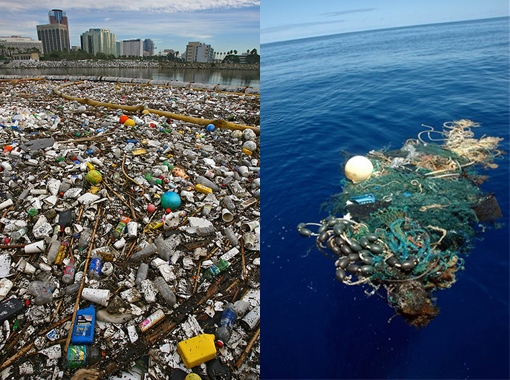
The floating mass of plastic junk - almost the size of the Northern Territory - in the Pacific is an environmental catastrophe: "...the nature of the problem is so immense and the fact it doesn't fall under the jurisdiction of any particular country means as a cause it's kind of like the runt of the litter, something that no particular country wants to take responsibility for." According to the United Nations Environment Program, it causes the deaths of more than a million seabirds every year, as well as more than 100,000 mammals including whales, dolphins, turtles and seals.

Mr. Richard Pain has been obsessed for years with the massive garbage patch that is trapped by currents in the North Pacific. "You look down into it and it's nightmarish," he said. "All these birds are eating it and dying, and now it's entering the food chain." Mr Pain, a keen ocean swimmer and environmentalist, said he was unfazed by the fact no one had ever managed to swim across the Pacific. Mr. Pain is planning to swim inside a six-meter-long bottle made from thousands of used water bottles, which will act as a shark cage and a reminder of the plastic waste that is threatening the Pacific Ocean.
“Don’t Go Near the Water” – The Beach Boys
Don’t go near the water
Don’t you think it’s sad
What’s happened to the water
Our water’s going bad
Oceans, rivers, lakes and streams
Have all been touched by man
The poison floating out to sea
Now threatens life on land
Don’t go near the water
Ain’t it sad
What’s happened to the water
It’s going bad
When I walk along the beach, I will find a plastic bottle or bag floating to shore. I think to myself, “What amazing fleshbag dumped this into water?”. It never occurred to me that certain ocean currents have all this plastic trash gathering in areas of the Pacific Ocean. Some of the trash is found floating in an area of water called the North Pacific Gyre. The currents can hold all this garbage for years!
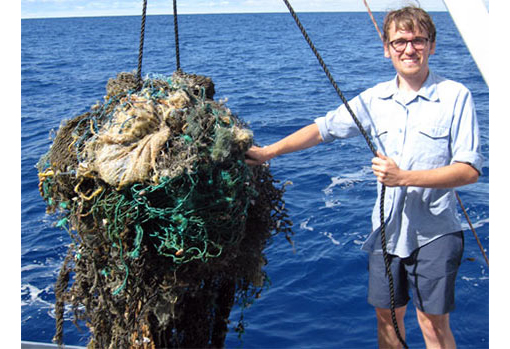
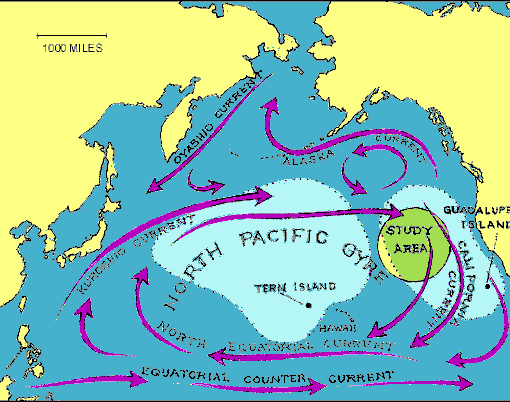
An Australian film-maker is training to swim from Japan to California, a trip that will take him through the Great Pacific Garbage Patch, a huge floating rubbish dump. Richard Pain's plan is to swim inside a giant plastic bottle, made up of thousands of small water bottles, in order to highlight the devastating marine pollution and raise money for research into the North Pacific Gyre, as the garbage patch is also known, held in place by four competing clockwise currents, consists of garbage thrown off ships or blown off land bordering the northern Pacific.
According to the United Nations Environment Program, it causes the deaths of more than a million seabirds every year, as well as more than 100,000 mammals including whales, dolphins, turtles and seals.
...to swim across the Pacific Ocean
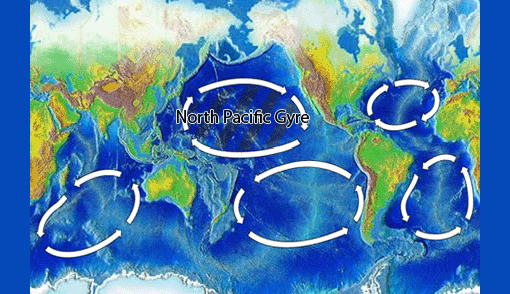
Mr. Pain said his journey would take him through what is known as the North Pacific Gyre or the Great Pacific Garbage Patch. Because of four competing ocean currents which operate in a clockwise direction, the garbage thrown off ships and blown off land has accumulated in a becalmed area in the centre, posing risks to birds and marine life.
As if swimming 9000 kilometers from Japan to the US is not enough of a challenge, Richard Pain is also planning to plough through the middle of the Great Pacific Garbage Patch, a floating mass of plastic junk almost the size of the Northern Territory. "I realize it's completely mad," said the filmmaker, 45, who is selling his Randwick home to raise some of the money needed for the project. "But I'm aware there is a lot of green fatigue in the broader population. This is a way to try and raise awareness by doing something more compelling. It's like trying to do an environmental version of Super Size Me."
Mr. Pain, a keen ocean swimmer and environmentalist, said he was unfazed by the fact no one had ever managed to swim across the Pacific. He said he had inherited his athletic build and determination from his father, a bronze medal-winning rower at the 1952 Helsinki Olympic Games. Mr Pain is planning to swim inside a six-meter-long bottle made from thousands of used water bottles, which will act as a shark cage and a reminder of the plastic waste that is threatening the Pacific Ocean.
The bottle will be towed by a boat with his fiancée, Natasha, pregnant with their first child, on board. "I want to create that iconic media image that everybody picks up and says, 'Oh my God, there's a man in the middle of the ocean in a gigantic water bottle,' " he said. He is also making a documentary about the attempt. Mr. Pain has been obsessed for years with the massive garbage patch that is trapped by currents in the North Pacific. "You look down into it and it's nightmarish," he said. "All these birds are eating it and dying, and now it's entering the food chain." He is training daily but expects it will be up to 18 months before he is strong enough to set off on his record-breaking attempt, which will take up to 45 weeks. It will be critical for him to ride the Kuroshio current to have any hope of completing the task.
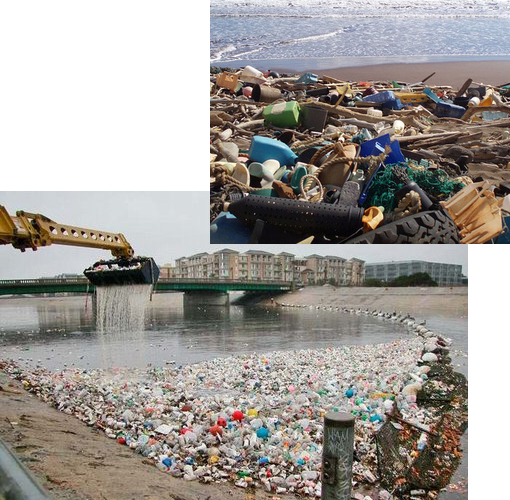
As well as increasing awareness about pollution, Mr. Pain wants to raise $1 million for research into the North Pacific Gyre, the body of water filling with plastic rubbish. "The ideal would be for me to walk in the water in Japan, the land of plastic, start swimming and emerge months later on Santa Monica Beach with Richard Branson handing me a check and looking at his watch and saying, 'You made it with five minutes to spare.'"
Swirling Mass of Ocean Trash Grows Bigger Than The U.S.
If the Great Pacific Garbage Patch gets any bigger, we may have to colonize it--that is, if it doesn't invade us first. This swirling mass of plastic debris was a Texas-sized vortex when I first wrote about it in November. Now, this mass of roughly 100 million tons of garbage has overtaken an "area that is maybe twice the size" of the continental United States, as one researcher who's studying the vortex told the Independent.
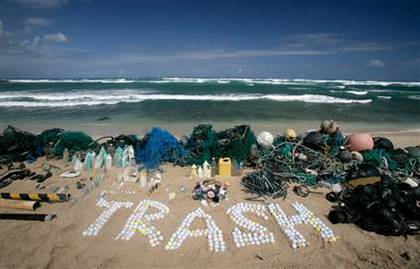
Oceanographer Curtis Ebbesmeyer, a "flotsam" expert, has been trailing the trash vortex for fifteen years and describes it as "a big animal without a leash: when that animal comes close to land, as it does at the Hawaiian archipelago, the results are dramatic. The garbage patch barfs, and you get a beach covered with this confetti of plastic."
The patch of garbage, which has actually expanded into two connecting areas known as the Western and Eastern Pacific Garbage Patches, was first discovered in 1997 by Charles Moore, an American oceanographer who was "taking a short cut home from a Los Angeles to Hawaii yacht race."
As Moore navigated through the rarely traveled North Pacific gyre, "a vortex where the ocean circulates slowly because of little wind and extreme high pressure systems," he became perplexed that there, thousands of miles from shore, was an endless stream of debris: "Every time I came on deck, there was trash floating by. How could we have fouled such a huge area? How could this go on for a week?"
The spectacle both galled and galvanized Moore. Heir to an oil industry fortune, he sold his business interests and became an environmental activist, founding the Algalita Marine Research Foundation.
Before the advent of modern plastics, the garbage we dumped in the ocean eventually degraded, but now, "every little piece of plastic manufactured in the past 50 years that made it into the ocean is still out there somewhere," as Tony Andrady, a chemist with the Research Triangle Institute, told the Independent.
The UN Environment Programme estimates that in 2006, every square mile of ocean contained 46,000 pieces of floating plastic. This slowly revolving mass of rubbish kills "more than a million seabirds every year, as well as more than 100,000 marine mammals," according to the UN Environment Programme.
The plastic poses a health hazard to humans, too, because it acts as a carrier for the chemicals and pesticides that foul the ocean and find their way in to our food chain. Moore warns that this toxic "plastic stew" will double in size over the next decade unless consumers cut back on their use of disposable plastics.
Richard Pain said he realized that swimming 9,000 kilometers (5,500 miles) from Japan to California was "completely mad" but said he hoped it inspired others to think more about the environment. "If I can do something this crazy, everybody else can do something," he told AFP.
"Whether it's recycle, reuse, rethink, stop using single use plastics... just change their behaviour in some simple way." Pain, 45, plans to swim in a giant recycled plastic water bottle made out of thousands of smaller plastic water bottles. The structure, which he said is under design, is intended to protect him from the hazards of the ocean. "All the small bottles will be in the shape of one big bottle," he said.
A Sydney man is hoping to draw attention to the problems of global warming and plastic pollution by swimming between Japan and the US in a giant plastic bottle. Richard Pain's swim will take him through what is known as the Great Pacific Garbage Patch, an area of rubbish the size of Queensland floating in the ocean.
"My plan is to build a giant recycled plastic water bottle out of thousands of smaller recycled plastic water bottles, and then use that as an enclosure or shark cage to then swim from Japan to America, through what is called the North Pacific Gyre or Great Pacific Garbage Patch," he said. "an environmental catastrophe."
"Basically there are four currents in that area of the Pacific that circulate in a clockwise direction and they aggregate all this plastic in to this central becalmed area called the gyre." Mr Pain says he is undertaking the journey to combat 'green fatigue' and raise the profile of a cause presently being ignored by governments around the world. "I think it's time for everyone to do something, basically my view is if I can do something this crazy everyone else can do something," he said.
"It's a call to arms... an attempt to combat green fatigue. "And on an environmental level the nature of the problem is so immense and the fact it doesn't fall under the jurisdiction of any particular country means as a cause it's kind of like the runt of the litter, something that no particular country wants to take responsibility for.
"So that sounds like my kind of cause."
The Patch is around 2200 kilometers long and 800 kilometers wide, depth to 10 meters.
(unquote)
Photos courtesy of yudu A Clean Life, Wikipedia, TreeHugger, usoceangov / Flickr, News from the Neumann, its a man made world, and Alex Hofford / Greenpeace


Contact Us

RSS feed


Your blog seems quite new to me, but the content in it makes me feel engaged, It’s my first time to see your page and as time goes microsoft number usa think I will be checking out for more details. You are doing great, keep up.
I admire the content of this article which is well researched and well worded. I am involved in this subject was so deep that I could not stop reading. I'm impressed with your work and skills. Thank you very much.
Care of the environment is everyone's responsibility.From your article,its now clear that we have greatly negleted our part and its time we be aware of the great danger we are subjecting the marine life.
I pity the film makers. It is not easy to swim through such an area. Its high time each of us consider cleaning our environment.
What an amazing article. I have always been looking for such useful information and I was lucky to find it in your site. Thank you for sharing and keep up the good work.
I am glad I visited your blog for this amazing post. Thank you very much for taking your time to share this with us
Thanks for this publish! Improving the guidelines vs changing the guidelines. . It’s truly beneficial for me!
Glad to know that popular filmmaker is trying to clean garbage in marine. Hope, other people inspire from such adventures.
It is a nice post.
An obligation of appreciation is all together to give such an OK article and now I am chasing down clash imperial ios traps to hack strife illustrious pearls and golds with the objective that I play struggle regal redirection energetically.
Thank you very much.
Well done! A perfect example of reading and conduct here in a right way. Looking forward more here!
Wow. cool post. I’d like to write like this too – taking time and real hard work to make a great article… but I put things off too much and never seem to get started. Thanks though. https://www.commonrailparts.net">common rail come from https://www.zjsensor.com">sensor .
This website is so cool and full of constructive information. Keep sharing and I will always support to such a great blog posts.http://sharkspeed.no/pCategory-1210-Mc-byxor"> mc bukser
This is not a good sign and shows that we, being human are destroying nature. This garbage is a big threat to underwater life so it is a world issue to be discussed at UNA.
A Sydney man is hoping to draw attention to the problems of global warming and plastic pollution by swimming between Japan and the US in a giant plastic bottle. Richard Pain's swim will take him through what is known as the Great Pacific top essay writing service
After Share this information you helped to many people. Many be they will read this information and i also help you to share this information and students can hire the best who are looking some to https://www.studentsassignmenthelp.com/make-my-assignment/" title="Make My Assignment">make my assignment they can check here valuable information because we have professional writer to complete you assignment before given time.
I hope that it doesnt disappoint me as much as this one. I mean, I know it was my choice to read, but I actually thought youd have something interesting to say. cara mengobati infeksi saluran kemih
I didn't know about this page. Thanks for sharing
https://www.happyrepublicdayimages2016i.com">republic day wishes quotes
https://www.happyrepublicdayimages2016i.com/2015/12/best-happy-republic-day-2016-images-hd.html">happy republic day images
it's really illicit to toss plastic waste into the water. Any individual who has ever experienced a vessel would realize that, since each water craft has signs saying what can be dumped and where. https://www.helpdohomework.com/pay-to-do-homework"> do my homework for me . Indeed, it's a global bargain that makes dumping plastic in the seas illicit significantly more than 25 miles out to ocean.
Thanks is your information is very good.
We are providing best assignment writing service in UK and high quality assignment
http://www.allassignmenthelp.co.uk
Thanks for sharing the great post have a look at it.
https://www.biggboss9winnerr.in">bigg boss 9 starting date 2015 and
https://www.biggboss9winnerr.in/2015/09/bigg-boss-winners-list-of-all-seasons.html">bigg boss winners name all season and
https://www.biggboss9winnerr.in/2015/09/bigg-boss-season-9-final-contestants.html">bigg boss 9 expected contestants list
I would like to thank you for the efforts you have made in writing this article. I am hoping the same best work from you in the future as well. https://www.allassignmenthelp.com
A Sydney man is hoping to draw attention to the problems of global warming and plastic pollution by swimming between Japan and the US in a giant plastic bottle. Richard Pain's swim will take him through what is known as the Great Pacific https://www.domyessayuk.com">write my essay for me
It's very good to clean the sea from trash. We have to take care baout nature.
It is an extremely dishearted perspective that individuals toss junk in the oceans by which they make contamination in the ocean and it is bad for the fishes. https://www.buyassignmentservice.com/buy-assignments-online-uk">buy assignments
it's truly illegal to hurl plastic waste into the water. Any person who has ever encountered a vessel would understand that, since each watercraft has signs saying what can be dumped and where. get my work done for me . Surely, it's a worldwide deal that makes dumping plastic in the oceans unlawful essentially more than 25 miles out to sea.http://penmypaper.com/">write my paper for me
Sydney swimmers are the providing the best coaches in Sydney and if you are looking for free classes then call us now at 0431 571 161
It is a very dishearted view that people throw trash in the seas by which they create pollution in the sea and it is not good for the fishes. https://www.ordercollegepapers.com/do-my-coursework">college coursework help
pollution is major factor of global warning now a days people got careless about the safety of earth we need a captain planet to solve and control global warming :)
i am not getting the point in the story of junk size of North America?https://www.ordercollegepapers.com/write-a-paper-for-me">View My Profile
Viewing your professional post! Your writing is sufficient and fantastic .I will always be aware of you
https://www.newamericanjackets.com/product/emma-swan-once-upon-a-time-jacket.html">Once upon a time jacket
I have never truly show around https://grabessay.com/">GrabEssay - find paper writer online. I have heard fantastic items about them although further I am directly curious. Have you always interpret some moreover what was your grab on the worth of process that the utilitys give scholars along?
plastic that starts in human hands yet winds up in the sea, frequently inside creatures' stomachs or around their necks. This marine flotsam and jetsam has sloshed into the general population spotlight as of late, on account of developing media scope and additionally researchers and voyagers who are progressively going to the North Pacific to see plastic contamination in activity. some of the Junk Removal Services In Toronto help clean the office and our other places.
Hello friend,i like your article ,it is very importanthttps://www.longislandrecyclers.com/"> topic and you done a great job by discussing this topic.Keep it up.
I think it's time for everyone to do something, basically my view is if I can do something this crazy everyone else can do something.
That's a lot of garbage. Hope there is money in it.
There is only garbage not money you hope. https://www.palowear.com/emma-once-upon-a-time-jacket.html">Emma swan jacket at Palowear
Good attraction of included celebrity to help people i like you ideas every to help i would like to more https://www.buyassignment.net/">Visit here
Such a nice blog and i appreciate your all efforts about your thoughts. it's really good work. well done. I would like to share something really helpful for education.
https://www.spazeapparel.com/devon-jones-d475-mens-sweater.html">Devon & Jones Mens Sweater
rightly said
https://www.spazeapparel.com/men/men-blank-t-shirts">mens cotton tees