You are herescience
science
Photos: polar bear cub in Alaska looking up to the sky and "praying for snow"


(quote)
A polar bear appeared to be praying for a cold winter after being seen placing his huge paws together and looking up at the sky.
The cub bear was pictured seemingly looking up to the heavens and asking for divine intervention in the animal's current plight.
Temperatures in their Alaskan habitat are higher than usual and as a result the pack have been left stranded on land waiting for the ice to freeze.
Until temperatures drop and more ice freezes after melting during the spring, the polar bears cannot go and find seals.
The male juvenile bear made the plea to a higher power just before he went to sleep, while his while his mother and sister were already napping.
Photographer, Shayne McGuire, captured the beautiful bear in Barter Island, Alaska, on the October 7.
She said: 'It was nap time for the bear, his mum and sister had already curled up, yet, there he sat, contemplating something, that we will never know.
'Then he looked up at the sky, raised his head and paws, and I heard one of my group say 'he is praying for the ice to freeze.'
'It is late in the season and yet, very little snow.
' I have seen global warming affect their habitat, I have been going since 2013 and there has always been snow in late September, early October.
'In 2015, there were snow storms and the snow was deep.
'Since then, I have been in early October to mid October and have had some ice, very little snow.'
(unquote) read more »


Study: Earth magnetic poles could soon flip, increasing exposure to Solar radiation, damaging power and communications systems

(quote)
Speedy flip in Earth's magnetic field could cause trillions in damage, scientists warn
A new study of previous reversals of Earth's magnetic field has found a rapid shift occurred within two centuries — a discovery that has prompted researchers to warn of a potential dire scenario.
According to a team of international scientists, including from the Australian National University (ANU), such an event in the future would increase our planet's exposure to the Sun's radiation, and could cause trillions of dollars in damage by decimating power and communications systems across the globe.
The Earth has a magnetic field that scientists believe is generated by motion in the planet's core. It's what gives us our north and south poles and powers compasses.
We've known for more than a century that our planet's magnetic field has been weakening at a rate of about five per cent a century, prompting concerns that the Earth's magnetic poles could soon flip - an event that could have potentially disastrous results for life on Earth.
From the electrical grids that power our computers to the satellites that let us watch TV, many facets of our lives depend on the Earth's magnetic field. It also acts like an invisible force field protecting Earth from solar winds and harmful cosmic radiation.
(unquote)
Image courtesy New Zealand Herald
New study: whole milk won’t kill you, full-fat dairy products may actually help prevent a severe stroke

(quote)
HOUSTON: a new study finds that consuming full-fat dairy products - including cheese, yogurt, and butter - likely won’t play a role in sending you to the grave any sooner.
Researchers from The University of Texas Health Science Center at Houston say that not only are dairy fats not linked to the development of heart disease or stroke, it turns out they may actually help prevent people from suffering a severe stroke.
"Our findings not only support, but also significantly strengthen, the growing body of evidence which suggests that dairy fat, contrary to popular belief, does not increase risk of heart disease or overall mortality in older adults," says Marcia Otto, the study’s first author and an assistant professor in the Department of Epidemiology, Human Genetics and Environmental Sciences at the university, in a media release.
"In addition to not contributing to death, the results suggest that one fatty acid present in dairy may lower risk of death from cardiovascular disease, particularly from stroke," says Otto. That fatty acid, known as heptadecanoic acid, led the researchers to conclude that people who show higher fatty acids levels - particularly from full-fat dairy products - had a 42 percent lower chance of death due to a stroke.
(unquote)
Photo courtesy Iron Man Magazine
Happy Phi Day 1.618, a date that matches the first four digits of the golden ratio, comes once a century
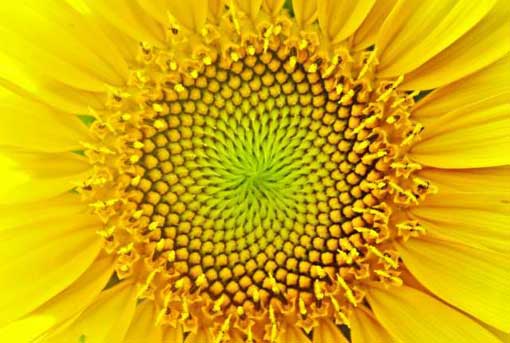
Represented by the 21st letter of the Greek alphabet, the golden ratio, which comes out to roughly 1.618 when rounded, is the number you get when you divide a line into two parts so that the longer part divided by the smaller part is the same as the total length divided by the longer part (or simplified: When the smaller is to the larger as the larger is to the whole).
The Pyramids at Giza, Leonardo da Vinci's "Vitruvian Man," nautilus shells, sunflower seed heads, and spiral galaxies all feature the golden ratio.
The golden ratio is also closely related to the famous Fibonacci sequence. In this series of numbers beginning with zero or one, each subsequent number equals the sum of the previous two (i.e., 1, 1, 2, 3, 5, 8, 13, 21, 34, 55, 89, 144, etc.). The ratio of any two successive numbers in this sequence comes very close to the golden ratio. Shapes made with Fibonacci dimensions are considered pleasing to the eye, which is why they so often appear in art, either unintentionally or by design.
(unquote)
Image courtesy MSN / iStock
9 out of 10 people worldwide breathe polluted air, causes 1 in 9 deaths, 14 out of 15 most polluted cities are in India


(quote)
Washington Post: As China cleans up its act, India’s cities named the world’s most polluted
India’s capital, New Delhi, choked by rising automobile emissions and construction dust, was named Wednesday the world’s most polluted megacity by the World Health Organization, which analyzed the levels of the pollutant PM10 in the air in cities with populations above 14 million between 2010 and 2016.
Greater Cairo was the second most polluted large city. India’s other megacity of Mumbai ranked fourth on the list and Beijing fifth.
Nine out of 10 people around the globe are breathing polluted air, the study said, and air pollution is responsible for the deaths of 7 million people worldwide each year, most of them living in Asia and Africa. Of those deaths, 3.8 million were from indoor air pollution from unhealthy cook stoves, a huge problem in India.
Former perennial offender China, in response to citizen outrage, has taken steps to clean up its air, shuttering or reforming factories and reducing its coal consumption in favor of renewable energy. The moves helped improve air quality in Beijing and elsewhere but at a cost — many poor people were denied coal heat during winter or lost jobs.
The World Health Organization’s head of public health, Maria Neira, told the Reuters news agency that India should follow China’s lead. read more »
2018. First print release: One Step Wiser - World Culture Pictorial Online Journal Vol. 01, 02, 03, and 04

Step by step, into tomorrow. And so much to learn from yesterday.
2008-2018. 10-year journey of reflection. Cosmos is grand, comprehensive reading is twin to broad vision. Thus, World Culture Pictorial® Journal Collection - from poetry to policy, high tech to legends, endless wrestling of global powers... Cutting humour, rich content, exquisite art images, top quality press - one-of-a-kind book will draw you in.
An unique feature of WcP Journal Collection (192-page Volume 1, 196-page Volume 2, 170-page Volume 3, 190-page Volume 4) is to bring classic poems into technology-driven life. Classic poets found their philosophy in Nature (Lord Tennyson: "a half-glance upon the sky," Lewis Carroll: "great solitude"), and lived with passion (Lord Byron: "though I cannot be beloved, still let me love ").
Enjoy reading phenomena beyond horizon?
This uncommon WcP journal collection is for you!
First print 2018, top quality full-color press.
Available via Barnes & Noble, Amazon and other book stores, or buy direct with discount..
Scientific Benefits of Meditation: improves focus, immunity, reduces stress and depression (Infographic)

(quote)
Scientific Benefits of Meditation
Over 100 studies were analyzed (some of which are in themselves analysis of other hundreds of studies), and categorised the findings into 76 benefits (divided into 46 subheadings).
(unquote)
Image courtesy liveanddare.com
Contact Us

RSS feed


