You are hereBlogs / WcP.System.Thinker's blog / Getting worse: half of mammals in decline, 1 in 4 faces extinction; conservation can bring species back
Getting worse: half of mammals in decline, 1 in 4 faces extinction; conservation can bring species back

(quote)
BARCELONA, Spain, October 6, 2008 (ENS) - The world's mammals are in the grip of an extinction crisis, with almost one in four at risk of vanishing forever, according to the latest scientific assessment revealed at the International Union for the Conservation of Nature's World Conservation Congress, which opened Sunday in Barcelona.
The new study conducted for the IUCN Red List of Threatened Species for the first time assessed all of the 5,487 mammals on Earth and found that at least 1,141 of them are known to be threatened with extinction. At least 76 mammals have become extinct since the year 1500.

The real situation could be much worse as 836 mammals are listed as Data Deficient. With better information, scientists may classify even more species as being in danger of extinction. "Within our lifetime hundreds of species could be lost as a result of our own actions, a frightening sign of what is happening to the ecosystems where they live," said Julia Marton-Lefèvre, IUCN director general.
"The reality is that the number of threatened mammals could be as high as 36 percent," said Jan Schipper of Conservation International, lead author in a forthcoming article on the mammal assessment in the journal "Science." The project to assess the world's mammals was conducted with help from more than 1,800 scientists from over 130 countries. The assessment also indicates that conservation can bring species back from the brink of extinction, with five percent of currently threatened mammals showing signs of recovery in the wild. "We must now set clear targets for the future to reverse this trend to ensure that our enduring legacy is not to wipe out many of our closest relatives," said Marton-Lefèvre.
The results show 188 mammals are in the highest threat category of Critically Endangered, including the Iberian Lynx, Lynx pardinus, which has a population of between 84 and143 adults and has continued to decline due to a shortage of its primary prey, the European rabbit, Oryctolagus cuniculus.
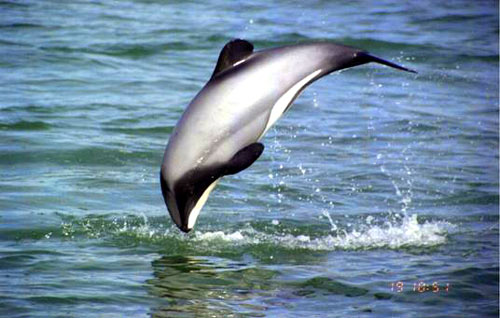
Two of the marine mammals teetering on the edge of extinction are found only in New Zealand - the Hector's dolphin, Cephalorhynchus hectori, and the closely related Maui's dolphin, Cephalorhynchus hectori ssp. maui. A mere 111 Maui's dolphins remain, and the species is classified as Critically Endangered on the new Red List. Gill netting and trawling are killing these dolphins faster than they can breed, says the conservation organization Care for the Wild International. Since the introduction of nylon filament gill nets in the 1970s, Hector's dolphin numbers have dropped by two thirds from some 29,000 to below 8,000. The situation for Maui's dolphins is worse as 90 percent have already been lost and fewer than 30 adult females survive. These dolphins are falling victim to human economic activities, as are many of the most vulnerable mammals species.
It may be too late to save the 29 species that have been flagged as Critically Endangered Possibly Extinct, including a rodent once found in Cuba, the Little Earth Hutia, Mesocapromys sanfelipensis, which has not been seen in nearly 40 years.
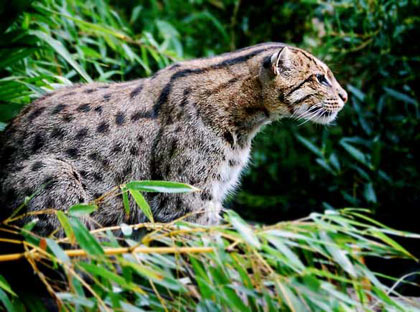
Nearly 450 mammals have been listed as Endangered, including the Tasmanian devil, Sarcophilus harrisii, which was moved from the category of Least Concern to Endangered after the global population declined by more than 60 percent in the last 10 years due to a fatal infectious facial cancer. The fishing cat, Prionailurus viverrinus, found in Southeast Asia, moved from Vulnerable to Endangered due to habitat loss in wetlands. The Caspian seal, Pusa caspica, moved from Vulnerable to Endangered. Its population has declined by 90 percent in the last 100 years due to unsustainable hunting and habitat degradation and is still decreasing.

Habitat loss and degradation affect 40 percent of the world's mammals. It is most extreme in Central and South America, West, East and Central Africa, Madagascar, and in South and Southeast Asia. Over harvesting is wiping out larger mammals, especially in Southeast Asia, but also in parts of Africa and South America.
The assessment of the world's mammals shows that species can recover with concerted conservation efforts. The black-footed ferret, Mustela nigripes, moved from Extinct in the Wild to Endangered after a successful reintroduction by the U.S. Fish and Wildlife Service into eight western states and Mexico from 1991-2008. Similarly, the wild horse, Equus ferus, moved from Extinct in the Wild in 1996 to Critically Endangered this year after successful reintroductions started in Mongolia in the early 1990s. Père David's Deer, Elaphurus davidianus, endemic to China, is listed as Extinct in the Wild. However, the captive and semi-captive populations have increased in recent years and the IUCN says it is possible that truly wild populations could be re-established soon.
"The longer we wait, the more expensive it will be to prevent future extinctions," says Dr. Jane Smart, Head of IUCN's Species Programme. "We now know what species are threatened, what the threats are and where - we have no more excuses to watch from the sidelines."
(unquote)
Photos courtesy of Wikipedia, Erin Green / New Zealand Department of Conservation, Papilio/Corbis, Mathieu Ourioux/PA, and Alicia Wirz/PA
Original Source: Environment News Service and Times Online
Related Articles: Half of the world's mammal species in decline (with charts and tables) and Extinction Crisis Worsens; "Dow Jones" Approach Touted


Contact Us

RSS feed


I like the helpful information you provide in your articles. I will bookmark your weblog and check again here frequently. I am quite certain I will learn plenty of new stuff right here!