You are hereTen years after it was introduced, France bids au revoir to the compulsory 35-hour work week as part of economic reforms /
Ten years after it was introduced, France bids au revoir to the compulsory 35-hour work week as part of economic reforms
(quote)
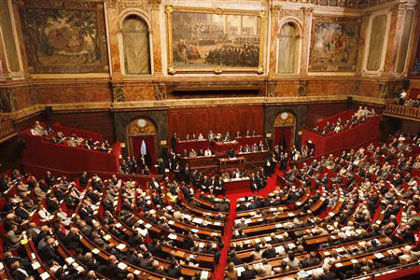
PARIS: Ten years after it was introduced, France has ended the compulsory 35 hour work week. Legislators in France have voted to allow companies to sidestep the 35-hour workweek by negotiating individual overtime agreements with their employees. The new legislation, which was passed by Parliament late Wednesday night and which will take effect in September, is the boldest step yet in stripping what many view as an emblematic labor law, without quite getting rid of it. While the workweek limit is as good as buried, every hour beyond 35 that is worked will be considered overtime and will therefore be more expensive.
Labour Minister Xavier Bertrand denied that people would have more working hours imposing on them and said now "everything will be negotiated company by company." Under the new legislation no one in France can work more than 48 hours in a given week, including overtime. Right now, despite the current law, many French employees work longer than 35 hours a week but accumulate time off or overtime. They actually average 41 hours, compared with 41.7 in Germany, 43.1 in Britain, 41.3 in Italy and the EU average is 41.9. In terms of paid annual leave, the French are in the mid-range in Europe with 25 days holiday as guaranteed non-working days.

The new legislation opens the way for company-specific negotiated agreements between employers and labor unions about the number of hours a week and days a year an employee works. The new limits are more generous than before: For manual workers who are paid by the hour, the weekly maximum limit rises to 48 hours, in line with European Union legislation. For white-collar staff members, paid by the day, the annual maximum of days they can be asked to work will rise to 235 days from 218. Also up for negotiation is the amount of time an employee gets in compensation for the extra hours worked, as opposed to being paid for the overtime.
The new changes are likely to affect small and medium-sized businesses most. Many large companies benefited from the additional flexibility that the 35-hour week provided by allowing them to annualize work time, making staff members work more in high season and less in low season without having to pay costly overtime. Blue-collar workers have periodically complained that this practice ended up reducing their income.

But most employees, and particularly those with comfortable incomes and a preference for additional time off, have grown attached to the shorter workweek. Professionals, whose salaries are calculated on a daily basis rather than hourly, fear that they will lose a dozen extra holidays a year that they had enjoyed in compensation for working more than the legal 35 hours a week. Their dismay at the changes was on display Wednesday afternoon when hundreds protested outside the Senate building, sporting banners with slogans like "There is life after work." And the union that represents white-collar employees and management staff, CFE-CGC, published an open letter in French newspapers complaining about the changes.
The new legislation also includes rules to make labor unions more representative. Any union participating in negotiations on work time needs to have obtained at least 10 percent of the vote in company elections. But any union representing 30 percent or more of the internal vote is allowed to sign a binding agreement with management.
(unquote)
Photos courtesy of The Economist, Reuters/Charles Platiau, and AFP
Original Source: euronews and International Herald Tribune
Reply
Contact Us

RSS feed


