You are hereglobal-warming
global-warming
8 Ideas to Fix the Global Food Crisis
(quote)
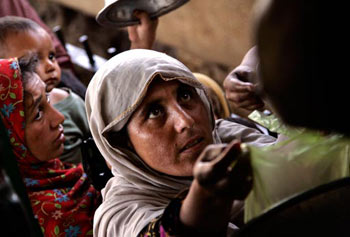
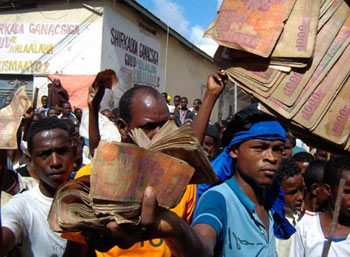
The world food crisis has two faces. Here in the United States, shoppers stare in disbelief at the rising price of milk, meat, and eggs. But elsewhere on the globe, anguish spills into the streets, as in Somalia last week when tens of thousands of rioters converged on the capital to protest for food.
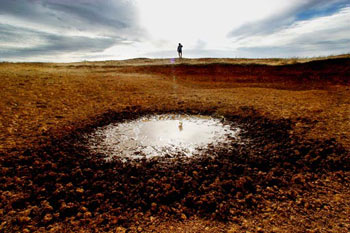
The strain on U.S. consumers, grappling with the sharpest increase in grocery prices in years, is small compared with the starvation that toppled Haiti's government, ignited riots around the world, and is deepening the tragedy of Myanmar's cyclone survivors. And yet the connection between the developed and developing worlds will be crucial to solving what one United Nations official has called a "silent tsunami" of food prices that has plunged 100 million people deeper into poverty. To stem the misery, relief officials are calling both for emergency aid and for changes in policy worldwide.
...Among the proposed solutions: read more »
- Take a Pause on Biofuels
- Improve Food Aid
- Produce Higher Yields
- Grow Better Crops
- Curb the Speculators
- Break Down Trade Barriers
- Eat Less Meat


Oxygen-depleted Dead Zones in Oceans Increasing
"Records stretching back to 1960 prove what climate models had predicted: warmer oceans contain less oxygen. Oceanographer Lothar Stramma of the University of Kiel in Germany and his colleagues report in Science that an analysis of historical records and recent samples show that as the globe has warmed, waters with low oxygen content have expanded in the tropical Atlantic and equatorial Pacific oceans.
"The oxygen concentrations in these oxygen-minimum zones have decreased with time," says oceanographer and study coauthor Gregory C. Johnson of the National Oceanic and Atmospheric Administration's Pacific Marine Environmental Laboratory in Seattle, Wash. "The regions of low oxygen have also expanded vertically by both extending deeper into the ocean and closer to the surface."
Fish and other sea life cannot survive in such waters—and this expansion reduces the area where fish can thrive, says oceanographer Janet Sprintall of the Scripps Institution of Oceanography in La Jolla, Calif., who also coauthored the study. She notes that fisheries may be affected as well."
Image courtesy of Scientific American

"Suddenly, It's Cool to Take the Bus"
"Sky-high gas prices have more commuters switching to employer-subsidized transportation—and loving it"
Photo courtesy of BusinessWeek

Contact Us

RSS feed


