You are herescience
science
Brilliant! Portugal clean-tech: world's biggest, £250m solar farm on abandoned land, less dependence on oil & gas

(quote)
5 June 2008
World's biggest solar farm at centre of Portugal's ambitious energy plan in country without oil or gas
From a distance the bizarre structures sprouting from the high Alentejo plain in eastern Portugal resemble a field of mechanical sunflowers. Each of the 2,520 giant solar panels is the size of a house and they are as technically sophisticated as a car. Their reflective heads tilt to the sky at a permanent 45 degrees as they track the sun through 240 degrees every day.
The world's largest solar photovoltaic farm, generating electricity straight from sunlight, is taking shape near Moura, a small town in a thinly populated and impoverished region which boasts the most sunshine per square metre a year in Europe.
When fully commissioned later this year, the £250m farm set on abandoned state-owned land will be twice the size of any other similar project in the world, covering an area nearly twice the size of London's Hyde park. It is expected to supply 45MW of electricity each year, enough to power 30,000 homes.
Portugal, without its own oil, coal or gas and with no expertise in nuclear power, is pitching to lead Europe's clean-tech revolution with some of the most ambitious targets and timetables for renewables. Its intention, the economics minister, Manuel Pinho, said, is to wean itself off oil and within a decade set up a low carbon economy in response to high oil prices and climate change.
"We have to reduce our dependence on oil and gas," said Pinho. "What seemed extravagant in 2004 when we decided to go for renewables now seems to have been a very good decision." read more »


After 14-day mission, 217 orbits, 5.7 million miles around the Earth, space shuttle Discovery softly touches down with 7 crew
(quote)
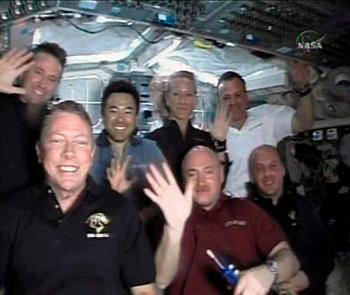
The U.S. space shuttle Discovery and its seven-member crew returned to earth Saturday after a successful two-week mission to the International Space Station. The shuttle safely touched down at 11:15 a.m. local time (1515 UTC) at the U.S. space agency's landing strip at the Kennedy Space Center in the southeastern state of Florida.
The mission's highlight was the delivery and installation of a new $1 billion Japanese science laboratory. The 11-meter long lab is now the largest module on the orbiting space station.
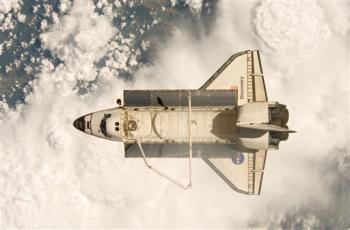
The Discovery crew also dropped off a new toilet pump to allow the Russian space station crew to fix their on board facilities. Discovery made 217 orbits and travelled 5.7 million miles around the Earth before it was given the green light to return home yesterday morning.
But on Friday Nasa engineers were forced to carry out last minute checks on the shuttle after astronauts spotted something floating away from their space ship. It turned out be a 12 inch metal clip from the rudder.

After four hours, the crew were told that its absence posed no danger for re-entry - during which temperatures around the shuttle can reach more than 2,500 degrees C.
Extensive checks are carried out on space shuttles before they begin re-entry after Columbia burned up as it entered the atmosphere, killing all seven crew on board, after foam panels in its heat shield were damaged during lift-off.

Commander Mark Kelly brought the shuttle safely back to Earth at 4.15pm (BST) yesterday afternoon through slightly cloudy skies. Television cameras were able to track the shuttle as it made its final approach, landed and deployed its brake parachute.
As Discovery came to a safe stop, Kelly said: "Great to be back." NASA officials described the landing as being as "smooth as it gets".

Astronauts also exchanged a member of the orbital outpost's permanent crew. American astronaut Greg Chamitoff remained on the space station for a six-month mission. He replaced U.S. astronaut Garrett Reisman who returned home after 95 days in space.
Reisman's wife, Simone Francis, was waiting at the Kennedy Space Center. Over the past week, Reisman described in quite romantic terms how much he missed her, calling her "my favourite Earthling".
(unquote)
Images Courtesy of AP Photo/NASA, BBC News
Original Source: BBC News (with video), The Telegraph, and VOA News
Next generation iPhone 3G to be released on July 11 with built-in GPS navigation for location-based services

(quote)
The next generation iPhone will be released in 22 countries on July 11 - and is cheaper and faster than its predecessor. Apple boss Steve Jobs unveiled the new iPhone 3G at the company's Worldwide Developers Conference in San Francisco on Tuesday morning.
"Just one year after launching the iPhone, we're launching the new iPhone 3G that is twice as fast at half the price," he told the conference. The new version will be available through Vodafone in New Zealand, and will roll out in 22 countries on July 11. By the end of 2008 it will be on the market in 70 countries.

Discovery Channel 3-night series: NASA in 50 years, from Mercury to Gemini to Apollo, from Skylab to Hubble

(quote)
The Discovery Channel marks the 50th anniversary of the National Aeronautics and Space Administration with “When We Left Earth: The NASA Missions”, a six-part, three-night series crafted from what a network news release describes as "NASA's own secret film vaults."
As fliers who weren't involved in, you know, bombing anything, yet were continually putting their own lives at risk, astronauts were especially attractive: Indeed, they were potentially leading the country into a post-national, interstellar future, when we would all be simply citizens of Earth and aliens would come only from other planets. Wasn't John Glenn's spacecraft called the Friendship 7?

U.S. Senator Edward M. Kennedy undergoes successful brain surgery
(quote)
After investigating his options with his trademark intensity, Sen. Edward M. Kennedy underwent 3 1/2 hours of risky and exquisitely delicate surgery Monday to cut out as much of his cancerous brain tumor as possible. "I feel like a million bucks. I think I'll do that again tomorrow," the 76-year-old Massachusetts Democrat was quoted by a family spokeswoman as telling his wife immediately afterward.
The sole surviving son of America's most glamorous and tragic political family was diagnosed last month with a malignant glioma, an often lethal type of brain tumor discovered in about 9,000 Americans a year. Cutting a tumor down to size — or "debulking" it — is extremely delicate because of the risk of harming healthy brain tissue that governs movement and speech. But Friedman, who is the top neurosurgeon at Duke and an internationally known tumor surgeon, said Kennedy should not experience any permanent neurological effects. Doctors said Kennedy was awake for much of the surgery, which begins with opening the scalp and removing a piece of the skull to expose the brain. Sometimes, to avoid damaging areas that control speech, surgeons use a probe to stimulate parts of the brain, then hold a conversation with the patient.
Monday's operation "spells nothing but hope," Duke's Sampson said from Chicago, where he was attending a conference of 30,000 cancer specialists. "What we're seeing with the surgery and this conference is that there's hope for patients with this kind of cancer."
(unquote)
Photos courtesy of AP Photo/Getty Images

Pushing the Edge of Science - Growing Electronics with Viruses, Finding Alien Life, and Quantum Cryptography
(quote)
Angela Belcher
Edge work: “Programming” viruses to perform useful tasks
Why? It is clean and efficient.
Where? MIT
Initial response: “I was called insane.”
In a series of experiments at MIT, Belcher, working with a team of about 30 students and postdocs, has successfully programmed viruses to incorporate, then grow, a variety of inorganic materials, including nanoscale semiconductors, solar cells, and magnetic storage materials. Separately, she is using yeasts as scaffold organisms because of their ability to grow many different materials. “We look at yeasts as factories,” she explains. “Instead of Budweiser, there’s Nanoweiser.” Belcher has begun working with the U.S. Army on nanoscale batteries that would weigh a fraction of what current batteries weigh and be woven into a soldier’s uniform. She is also training viruses to “find mistakes in materials and give off a signal.” One possible application: spraying viruses on an airplane fuselage to check for microscopic defects. In addition, the National Cancer Institute is funding Belcher to use viruses to find peptides that can specifically identify cancer cells.
Dimitar Sasselov
Edge work: Finding life on planets outside our solar system
Why? We have to know.
Where? Harvard University
Initial response: “People are always very excited.” read more »
Cellulosic Ethanol Plant Opens, Uses Waste Biomass to Make Biofuel
Original Source: Technology Review
(quote)
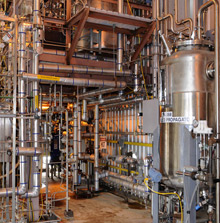
A biorefinery built to produce 1.4 million gallons of ethanol a year from cellulosic biomass will open tomorrow in Jennings, LA. Built by Verenium, based in Cambridge, MA, the plant will make ethanol from agricultural waste left over from processing sugarcane. It is the first demonstration-scale cellulosic ethanol plant in the United States and will be used to try out variations on the company's technology and is designed to run continuously. Verenium wants to demonstrate that it can create ethanol for $2 a gallon, which it hopes will make the fuel competitive with other types of ethanol and gasoline. Next year, the company plans to begin construction on commercial plants that will each produce about 20 to 30 million gallons of ethanol a year. Until now, technology for converting nonfood feedstocks into ethanol has been limited to the lab and to small-scale pilot plants that can produce thousands of gallons of ethanol a year. Since these don't operate continuously, they don't give an accurate idea of how much it will ultimately cost to produce cellulosic ethanol in a commercial-scale facility.
Almost all ethanol biofuel in the United States is currently made from corn kernels. But the need for cellulosic feedstocks of ethanol has been underscored recently as food prices worldwide have risen sharply, in part because of the use of corn as a source of biofuels. At the same time, the rising cost of corn and gas have begun to make cellulosic ethanol more commercially attractive, says Wallace Tyner, a professor of agricultural economics at Purdue University. A new Renewable Fuels Standard, part of an energy bill that became law late last year, mandates the use of 100 million gallons of cellulosic biofuels by 2010, and 16 billion by 2022.
So far, however, there are no commercial-scale cellulosic ethanol plants in operation in the United States, although a number of facilities are scheduled to start production in the next few years. The Department of Energy is currently funding more than a dozen companies that will be building demonstration- and commercial-scale plants. One of these, Range Fuels, based in Broomfield, CO, plans to open a commercial-scale plant next year. It will have the capacity to produce 20 million gallons of ethanol and methanol a year. Verenium will use a combination of acid pretreatments, enzymes, and two types of bacteria to make ethanol from the plant matter--called bagasse--that's left over from processing sugarcane to make sugar. It will also process what's called energy cane, a relative of sugarcane that's lower in sugar and higher in fiber. The high fiber content allows the plants to grow taller, increasing yield from a given plot of land.
The opening of the demonstration plant, and the current construction of a number of other demonstration- and commercial-scale cellulosic ethanol plants, marks a turning point for the industry, Riva says. The development of improved enzymes and fermentation organisms means that no further scientific breakthroughs are needed to make cellulosic ethanol commercially successful, he says. "There's been a tremendous amount of background work in science and technology development," he says. "We've learned so much about the process that the really important thing now is to start to deploy the technology at a commercial scale."
(unquote)
Contact Us

RSS feed