You are hereWcP.MarketWatch's blog
WcP.MarketWatch's blog
Ted Turner:“I’ve never asked for a bailout. Where does it end?” Big Three ask for $25 bil. Market’s bailout doubts

(quote)
Time: “What did you think of the $700 billion bailout plan?”
Turner: “When I was running CNN we never had any money and I never asked for a bailout. Where does it end? AIG, you know, they need $40 billion more and we only gave them a hundred billion last week, didn't we? It's just ridiculous. And now General Motors. They said we're going to give them $25 billion to retool. Retool what? They'll run through that money so fast they'll be back wanting more. We can't keep every loser alive.”

Wall Street sputters on weak data, bailout doubts read more »
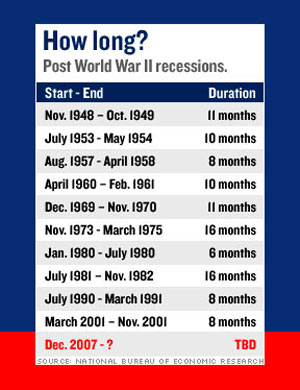
Now it's official: US in recession since 2007, one of the longest downturns since the Great Depression of 1930's

(quote)
The National Bureau of Economic Research said Monday that the U.S. has been in a recession since December 2007, making official what most Americans have already believed about the state of the economy.
The NBER is a private group of leading economists charged with dating the start and end of economic downturns. It typically takes a long time after the start of a recession to declare its start because of the need to look at final readings of various economic measures. The NBER said that the deterioration in the labor market throughout 2008 was one key reason why it decided to state that the recession began last year.
Global financial summit from G7 to G20; new strong voice of BRIC nations: Brazil, Russia, India and China

(quote)
Western nations began to cede some control as countries including Brazil, India and China – which with Russia form the so-called BRIC nations – managed to guarantee a greater presence on the international stage.
All three will now join the board of the Financial Stability Forum – the global economic policy powerhouse that to date has been the bastion of the G8.

Each is likely to play a stronger role in the reform of major institutions such as the International Monetary Fund than might previously have been witnessed under the old economic order.
The final summit communiqué also gave particular reference to emerging and developing economies, urging them to undertake commitments consistent with their capacities and roles in the global economy – a clear admission of their increased importance. read more »
The next Silicon Valley? A look at 6 technology launching pads across the US, from Pacific Northwest to Virginia

(quote)
Bellevue, Washington
With Microsoft's Redmond headquarters just five miles from downtown, Bellevue attracts a wealth of talented software engineers. (Hitachi and Sun Microsystems also have facilities in the area). The city hosts a number of successful startups, such as Expedia.com, dreamt up by former Microsoft employees, as well as a growing community of videogame developers. Other thriving local industries include telecommunications and wireless technology. For these industries, one of the city's main attractions is investment firm Trilogy Equity Partners, which was co-founded by John Stanton, Western Wireless founder and former CEO of T-Mobile USA, also based in Bellevue.

Portland, Oregon
Some people call it Silicon Forest. That's because the Portland metropolitan area has done an impressive job of attracting entrepreneurial tech talent, thanks in part to the presence of Tektronix, IBM and Intel. In fact, many of the city's computer-technology companies were started by former employees of these tech giants, focusing on areas such as open-source and educational software. But Portland isn't just about computer technology. Over the years, the city has earned a reputation for progressive energy policies, attracting a large sustainable-technology community, as well as the U.S. headquarters of Vestas, the world's largest wind-turbine manufacturer. Support for the Portland tech scene comes from organizations such as Oregon InC, a state-funded venture dedicated to nurturing Oregon's innovation economy. read more »
Main St wonders "people responsible for this are making half a million a year, why do we have to bail them out?"

(quote)
Melissa Hamlet worries that the stock market's wild swings will mean fewer potential buyers for her home. Restaurant owner Christopher Tocchio fumes that the government isn't holding failing businesses accountable for their reckless decisions. And Mary Vaughan, a recent widow, wonders why government rescues corporate America while she struggles to pay her bills. "I'm paying enough taxes now, and the taxpayers have to bail these big guys out?" she said.
Anger, fear, and shock about the Wall Street meltdown are percolating through conversations along Massachusetts' main streets. A whirlwind week of unprecedented government intervention to prop up the nation's financial system seemed to confirm people's worst fears: The economy is in peril and recovery is far off. Seemingly overnight, nearly everyone felt poorer - homes lost value, 401(k) investments were battered, and jobs, for some, were in jeopardy.
Lehman bankrupt, Merrill sold; worst day on Wall Street since 9/11 shakes major markets worldwide, shares tumble

(quote)
In one of the most dramatic days in Wall Street’s history, Lehman Brothers, the 158-year-old, fourth-largest U.S. investment bank that predates the Civil War and weathered the Great Depression, filed the largest bankruptcy in American history; while Merrill Lynch, the third largest investment firm, has agreed to sell itself to Bank of America, the nation's largest bank.

Investors suffered their worst losses since the terrorist attacks of 2001. Amid worries that the bankruptcy of Lehman Brothers and the sale of Merrill Lynch might not be enough to stop the downward spiral, stocks fell sharply in the last half hour of trading. By the end of the day, the Dow Jones industrial average had dropped 504.48 points, or 4.4 percent, as a record volume of more than 8 billion shares traded hands on the New York Stock Exchange. It was the biggest decline since Sept. 17, 2001 - the day the index reopened after the 9/11 terrorist attacks - when it fell 7 percent, or 684.81 points. read more »
New contender in the browser wars: Google to launch open source web browser Chrome on Tues., takes on Microsoft

(quote)
Google is launching an open source web browser to compete with Internet Explorer and Firefox. The browser is designed to be lightweight and fast, and to cope with the next generation of web applications that rely on graphics and multimedia.
Called Chrome, it will launch as a beta for Windows machines in 100 countries, with Mac and Linux versions to come. "We realised... we needed to completely rethink the browser," said Google's Sundar Pichai in a blog post. The new browser will help Google take advantage of developments it is pushing online in rich web applications that are challenging traditional desktop programs. Chrome will be an open-source product, meaning anyone can modify the software code and add features.
Google has a suite of web apps, such as Documents, Picasa and Maps which offer functionality that is beginning to replace offline software. "What we really needed was not just a browser, but also a modern platform for web pages and applications, and that's what we set out to build," Mr Pichai, VP Product Management, wrote.
US Stocks bounce back on latest economic readings - factory orders, new homes sales top forecasts, oil prices continue to fall

(quote)
Wall Street ended a volatile week with a moderate rebound Friday after better-than- expected economic data at least temporarily eased the worries of investors concerned about housing and the financial sector. Financials fell again on continued worries about the health of balance sheets, while technology stocks advanced. A day after a sharp drop in existing-home sales aided in pushing stocks sharply lower, economic news helped buoy the market on Friday.
The Commerce Department reported that factory orders for big-ticket manufactured goods, such as cars, appliances and machinery, rose by 0.8 percent in June, the strongest gain in four months and well ahead of Wall Street's expectations. But outside demand for defense equipment, orders would have been up only 0.1 percent. Another Commerce Department report showed that new-home sales dropped by a smaller-than-expected 0.6 percent to a seasonally adjusted annual rate of 530,000 units; the market expected sales to total 505,000. Although it marked the seventh decline in the past eight months, it stirred some hope that the housing market could be finding a bottom. Orders for durable goods rose 0.8% last month, far better than the 0.4% decline expected.

And there was good news about consumers, whose spending accounts for more than two-thirds of U.S. economic activity. The Reuters/University of Michigan index of consumer sentiment for the first part of July came in at 61.2, while economists forecast a reading of 56.4. The reading was a slight rebound from a 28-year-low last month. "This is a market that's looking for any good signs," said John Massey, a fund manager at AIG SunAmerica Asset Management. "People are trying to find the light at the end of the tunnel."
Some experts said, however, that trading is likely to be uneven in the coming days as Wall Street awaits Friday's July employment report. Linda Duessel, equity market strategist at Federated Investors, said economic figures such as the durable-goods numbers are important because they reveal continued demand from abroad, which could help U.S. companies continue to rake in profits even if the U.S. economy isn't running at full steam. "That's good news for market participants as we try to find a footing in the market because we really don't want to see our weakness leak outside the U.S.," she said.

The Dow Jones industrial average rose 21.41 points Friday, to 11,370.69, rebounding slightly from Thursday's decline of more than 280 points. Broader stock indicators also rose. The Standard & Poor's 500 index advanced 5.22, to 1257.76, and the technology-heavy Nasdaq composite index jumped 30.42, to 2310.53. For the week, the Dow fell 1.1 percent and the S&P 500 lost 0.2 percent. Friday's tech rally left the Nasdaq up 1.2 percent for the week. Oil fell $2.23 to settle at $123.26 a barrel. Crude prices have fallen more than $20 in recent weeks, alleviating some of Wall Street's concerns about the impact of inflation on consumers' ability to spend.
The stock market's volatility during the week—rallying Tuesday and Wednesday only to erase those gains Thursday—illustrates tentativeness behind some of the bets investors are making, said Hugh Johnson, chairman and chief investment officer of Johnson Illington Advisors. He said the market tends to react to the latest headlines. "It's just news sensitive, and the real question is, 'What's the next news going to be? Good or bad?' That means that the market doesn't have a trend or a direction. It depends entirely on whether the news is going to be good or bad on any given day and that doesn't give you, as an investor, a lot of confidence."

For the second consecutive session, financial-services stocks were hard hit, with Dow components Bank of America losing 3.5 percent and Citigroup falling more than 1 percent. For the year, each is down more than 28 percent.
Europe gains: European stocks posted their first back-to-back weekly gains since May as better-than-estimated earnings and lower oil prices fueled a rally in carmakers, and banks climbed on speculation credit-market losses will abate. Europe's Dow Jones Stoxx 600 Index increased 0.4 percent this week, extending its rebound from a three-year low on July 15 to 5.7 percent.
Asia falls: In Asia, stocks fell the most in six weeks, snapping a four-day rally. The MSCI Asia-Pacific index lost 2.8 percent. The index rallied 5.9 percent in the first four days of this week as concerns eased that bank losses will expand and oil tumbled.
(unquote)
Photos courtesy of AFP, AP Photo/Ed Ou & Bebeto Matthews, and Independent.ie
Original Source: Chicago Tribune and NY Daily News
Supplies up, demand declines, oil trades near 7-week low - drops below $125 for first time in over 6 weeks

(quote)
July 24 (Bloomberg) -- Crude oil traded near a seven-week low after reports showed demand in the U.S. and Japan, two of the three largest oil consuming countries, fell as high prices crimp fuel consumption. U.S. fuel demand averaged 19.9 million barrels a day last week, the lowest since January 2007, the Energy Department said yesterday. Japan imported 0.7 percent less oil in June than a year ago, the first decline in nine months, the Ministry of Finance said today.
"Our overall view is that oil prices are at a point that will bring about demand-side adjustments that will ultimately cause prices to be at a lower level," said David Moore, a commodity strategist with Commonwealth Bank of Australia Ltd. in Sydney. "There seems to be an intangible factor here where sentiment has swung quite sharply in the past couple weeks."

Crude oil for September delivery was at $124.23 a barrel, down 21 cents, at 11:36 a.m. Singapore time on the New York Mercantile Exchange. Yesterday, oil dropped $3.98, or 3.1 percent, to settle at $124.44 a barrel, the lowest close since June 4. Futures have lost 5 percent this week. Oil prices also fell as the Energy Department report showed that gasoline supplies rose 2.85 million barrels last week. Stockpiles of distillate fuel, a category that includes heating oil and diesel, climbed 2.42 million barrels. Brent crude oil for September settlement was at $125.10 a barrel, down 19 cents, on London's ICE Futures Europe exchange at 11:34 a.m. Singapore time. It dropped $4.26, or 3.3 percent, to close at $125.29 a barrel yesterday, the lowest settlement since June 4.
Demand has declined for three straight weeks, the Energy Department report showed. U.S. fuel consumption averaged 20.3 million barrels a day in the past four weeks, down 2.1 percent from a year earlier, the department said. Refineries operated at 87.1 percent of capacity last week, down 2.4 percentage points from the week before, according to the department. It was the lowest utilization rate since the week ended May 9. Refineries were forecast to operate at 89.5 percent of capacity last week, unchanged from the week before, according to the median of analyst estimates in the Bloomberg survey. Crude-oil inventories dropped 1.56 million barrels to 295.3 million. Stockpiles were forecast to decline 675,000 barrels, according to the survey results.

Oil has tumbled 16 percent from a record $147.27 a barrel on July 11, as a stronger U.S. dollar limited the appeal of commodities as a hedge against inflation and high prices cut fuel consumption. Prices also fell the past two days as Hurricane Dolly moved away from oil platforms in the Gulf of Mexico.
Energy companies evacuated some oil rigs as a precaution. That cut production in the Gulf by 4.7 percent, the U.S. Interior Department said yesterday. Companies that carried out evacuations include BP Plc, Noble Corp., Chevron Corp., Devon Energy Corp., Citgo Petroleum Corp. and Royal Dutch Shell Plc.
Oil and other commodities may drop further and the dollar increase if the Federal Reserve boosts interest rates to curb inflation. Philadelphia Fed President Charles Plosser yesterday said higher mortgage costs and continued declines in house prices pose no bar to raising interest rates. Policy makers must increase borrowing costs before inflation expectations become "unhinged," Plosser said in an interview with Bloomberg Television yesterday.
The dollar traded at 107.74 yen at 11:11 a.m. in Singapore, after rising 0.5 percent yesterday, when it reached 107.97, the highest since June 26. The U.S. currency was at $1.5684 per euro, after rising 0.5 percent yesterday and touching $1.5670, the strongest since July 9.
(unquote)
Photos courtesy of AP/Energy Department, Bloomberg News and LA Times
Original Source: Bloomberg
EU Energy Commissioner & ICE: speculators not driving oil prices. Billionaire investor Soros: price could soon fall back sharply

(quote)
Intercontinental Exchange is cooperating with regulators in their efforts to restrict oil trading, but the Atlanta-based company insists that speculation is not the reason for soaring prices.
The company, commonly known as ICE, operates a number of commodities trading exchanges, including a major oil futures exchange based in London.
They also made it clear they don't believe that's happening. "There is no evidence that regulators or researchers have found demonstrating that excessive speculation is driving crude oil prices," said Sarah Stashak, an ICE spokeswoman.

The cost of a barrel of crude oil has edged closer to its all-time high after OPEC president Chakib Khelil warned that oil prices “will not come down”. Ahead of a meeting with EU officials in Brussels today, he said that the cartel had done all it could to ease prices.
His comments pushed up benchmark crude in London by $1.24 to $137.15 a barrel - it hit an all-time high of $137.69 a barrel on June 6. The spot price - the cost of buying a barrel of oil for delivery that day - has risen close to $140.

European Union Energy Commissioner, Andris Piebalgs, said he was “not convinced” speculators are to blame and repeated his call for the Organization of Petroleum Exporting Countries to pump more oil and scrap production quotas. But OPEC Secretary-General Abdalla el-Badri said: “The market is currently hijacked by speculators,” including hedge funds. “There is no shortage of supply as I said before.”
Many analysts now expect crude prices to shoot up towards $200 a barrel as the growth in global demand for energy outpaces the supply.

However others, including billionaire investor George Soros, have warned that the price could soon fall back sharply, and that the price looks like a bubble.
Julian Jessop, of Capital Economics, said: "I've no doubt that there is some speculative froth in the market... it's impossible to prove if it is contributing $5 or $50 to the price.
"More recently [since April] speculative positions have been flat or falling, while prices have been rising sharply," he added, saying speculative activity could not explain the recent sharp increase in price from $100 to almost $140 a barrel.

(unquote)
Photos courtesy of AFP/File/Yasser al-Zayyat, AP Photo/Nabil al-Jurani, AFP/File/Joe Klamar, AP Photo/Yves Logghe, AFP/Marwan Naamani, Reuters/Susan Baaghil (Saudi Arabia), and Reuters/Saudi Press Agency/Handout

Original Source: Atlanta Journal Constitution and Telegraph UK

Image Gallery: Yahoo News: Oil Industry
Yahoo-Google deal faces scrutiny, antitrust experts say

(quote)
WASHINGTON (Reuters) - Google and Yahoo face intense U.S. Justice Department scrutiny of their deal to share some advertising revenue, and the heat will likely increase under a new administration, antitrust experts said. Google, with more than 60 percent of the Web search market, and Yahoo, with 16.6 percent, announced a deal last week that would allow Yahoo to place Google ads on its site and collect the revenue. The firms said Yahoo's cash flow could grow by $250 million to $450 million (127 million to 229 million pounds) in the first year under the deal, which Yahoo sought as an alternative to software giant Microsoft's $47.5 billion buyout offer.
Yahoo and Google describe the deal as very limited. "These are still independent companies who will continue to compete aggressively," said Yahoo lawyer Hewitt Pate of law firm Hunton and Williams. But the deal has raised eyebrows among antitrust lawyers. Bruce McDonald, a Jones Day antitrust attorney and former deputy assistant attorney general, pointed out that the arrangement could lessen Yahoo's incentive to compete vigorously against Google because Yahoo would collect revenue no matter which company placed an advertisement.
Euro, Franc, Krona to Benefit From Oil, U.S. dollar ranks bottom
Original Source: Bloomberg
(quote)
May 26 (Bloomberg) -- Currencies in Europe will benefit from record oil prices because of the region's energy efficiency, exports to oil-producing nations and vigilance against inflation, according to Barclays Capital. The euro, the British pound, the Swiss franc, the Swedish krona and the Norwegian krone should perform "relatively well" as oil prices rise, wrote David Woo, global head of foreign exchange strategy in London at the bank, the third-biggest currency trader. The U.S. dollar ranks bottom in terms of potential performance as energy prices climb, it said. "Europe is well positioned in the new paradigm, the U.S. is not," Woo wrote in a research note dated May 23.
The dollar slid as much as 8.9 percent to a record low against the euro this year as losses from the subprime mortgage collapse threatened to send the U.S. economy into a recession. At the same time, oil futures have soared to a record as a crude producers sought higher dollar prices to compensate for lower import revenues, according to Barclays Capital. This has created a "vicious circle'' where high energy prices increase the U.S. trade deficit and make other central banks reluctant to lower interest rates, leading to further dollar declines, Barclays Capital said. The euro bought $1.5757 at 5:23 p.m. in Tokyo, little changed from late in New York on May 23. It rose to $1.6019 on April 22, the highest since the common European currency's introduction in January 1999.
The U.S., Canadian, New Zealand and Australian score poorly in terms of their intensity of energy use because of their dispersed populations and focus on manufacturing or commodity industries, Barclays said. European economies are more densely populated, service-orientated and energy efficient, it said. Oil consumption accounts for less than 2 percent of nominal gross domestic product in Norway, Switzerland, the U.K. and Sweden in 2006, compared with more than 3.5 percent in the U.S. and Canada, the report showed. "The U.S. is the world's third-largest oil producer but because of the high energy intensity of its economy, its petroleum trade deficit is not much smaller than the eurozone, which produces no oil," Woo wrote. Japan and Switzerland may also suffer deteriorating trade balances as oil prices rise, the report said. Crude oil for July delivery rose by 96 cents to $133.15 a barrel in after-hours electronic trading on the New York Mercantile Exchange. It reached $135.09 on May 22, the highest since trading began in 1983.
(unquote)
Next month marks the tenth anniversary of the European Central Bank, guardian of the euro, which itself will turn ten thereafter.
Images courtesy of AP Photo/Haraz N. Ghanbari and AFP


Verizon Wireless joins LiMo Foundation, chooses Linux over Android for mobile platform
Original Source: Ars Technica
"Mobile carrier Verizon Wireless has joined the Linux Mobile (LiMo) Foundation and has announced plans to adopt the open source software platform. Linux-based phones will be available from Verizon next year, alongside other devices that run competing proprietary operating systems.
The LiMo Foundation is an industry group that was founded by leading handset makers. Their goal is to collaboratively develop a comprehensive Linux-based mobile software stack that can be modified easily and used at no cost on a wide range of hardware devices. Key members include Motorola, NEC, NTT DoCoMo, Panasonic, Samsung, and LG.
Verizon's adoption of Linux sends a clear message about the viability of the open source operating system in the mobile space. Carriers and handset makers seem to recognize that open source software provides them with better value and more flexibility than proprietary alternatives."