You are hereBlogs / WcP.System.Thinker's blog / Most threatened species on earth: one third of world’s coral reefs on verge of extinction due to ocean pollution, over-fishing
Most threatened species on earth: one third of world’s coral reefs on verge of extinction due to ocean pollution, over-fishing

(quote)
July 10 (Bloomberg) -- A third of the world's corals could be dead within a few years, a shocking new report warns today. The biggest study of its kind has found that 200 out of 700 species of coral are on the brink of extinction - far more than was previously thought. If they die, some of the most beautiful and colourful reefs - home to millions of species of marine life - could be devastated. The speed of decline has shocked the 39 scientists who carried out the survey. Just 10 years ago only 13 species of coral were endangered. Researchers, who published their findings in the journal Science, say they have been badly hit by climate change, coastal development and overfishing.
A team of 39 researchers assessed the state of 704 coral species and found 32.8 percent are threatened with extinction. The study results, published today in the journal Science, are "worse than expected," said co-author Suzanne Livingstone, a marine biologist at Old Dominion University in Norfolk, Virginia. "When we began this process, we didn't think it would be anywhere near as high as that," Livingstone, also a marine species assessor for the International Union for Conservation of Nature, said yesterday in a telephone interview. "Climate change is the overarching threat which comes in on a much larger, global scale," adding to localized disturbances, she said. Death of corals can lead to the collapse of entire ecosystems.

Reefs in the Caribbean are among the most severely at risk. Co-author of the report, Elizabeth Wood, of the UK Marine Conservation Society, said: "The proportion of threatened coral species greatly exceeds that of most terrestrial animal groups apart from amphibians. Coral reefs are some of the planets most incredible and diverse living systems and provide local communities in over 100 countries with food and other natural resources. " The spectacular reefs that lie in the world's shallow, tropical seas are made by tiny organisms only a few millimetres long. These coral polyps live in huge colonies, secreting calcium carbonate to form a hard skeleton over millions of years. Only the top layers of a reef are "alive". But the holes and crevices in the reefs provide shelter for thousands of different species of marine life.
The new study looked at 845 tropical reef-building coral species. Of the 704 corals for which detailed information was available, 231 species were at high risk of extinction, while 407 were threatened or near-threatened. Hundreds of millions of people depend on coral reefs for food, livelihoods and coastal defences. Coral reefs are home to around two million species - including a quarter of all sea fish. The fate of corals is crucial to the livelihoods of millions of coastal dwellers around the world. Reefs are worth about $30 billion a year to the global economy, through tourism, fisheries and coastal protection, according to the Millennium Ecosystem Assessment, a United-Nations supervised study published in 2005.
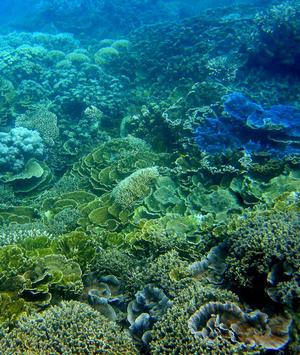
Higher levels of carbon dioxide in the atmosphere are warming surface temperatures and making seas more acidic, they said - "bleaching" corals. Sewage, destructive fishing, agricultural chemicals and building on coasts were adding to the destruction. Dr Rogers, senior research fellow at the Zoological Society of London's Institute of Zoology, said it was "death by a thousand cuts". "The resilience of corals to bleaching and ability to recover is heavily influenced by other stresses the corals are under, such as over-fishing or destructive fishing, declining water quality and nutrient loading from agrochemicals," he said. Even if they recover from bleaching events, corals are still more susceptible to disease and other problems.
While the best way to help preserve corals is to cut the emissions of greenhouse gases blamed for rising temperatures, tackling local threats by tightening regulations on fishing, coastal building and marine protection will reduce stress to corals, Livingstone said. "One of the big problems is these localized disturbances from human activities in conjunction with climate change,'' Livingstone said. "They are much more resistant and able to adapt if there are no other stresses acting on them."
Results of the Gland, Switzerland-based IUCN's assessment will be included in the group's Red List of endangered species in October. In addition to the 704 species rated by the scientists, insufficient data existed on a further 141 reef-building corals.
(unquote)
Photos courtesy of Reuters, PhysOrg.com, Sydney Morning Herald
Original Source: Bloomberg and Daily Mail, UK


Contact Us

RSS feed


