You are herescience
science
World population to reach 7billion in few days (increased 1billion in 12yrs), world resources under more strain than ever before



(quote)
Room for one more? World population to reach 7 BILLION in next few days
Children most likely to be born in Asia-Pacific region
Fears over pressure on food supply and medical care
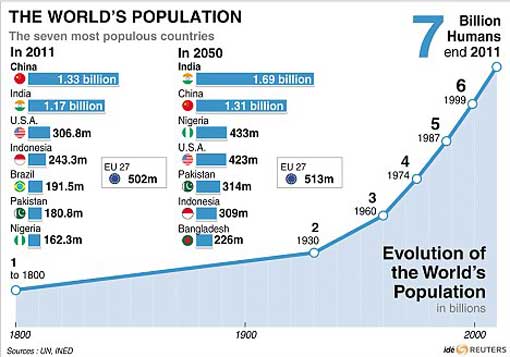
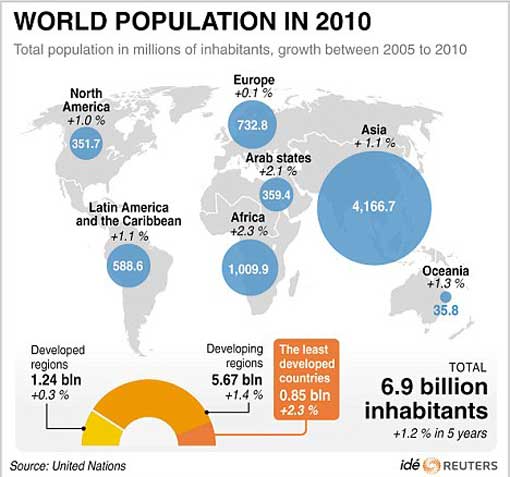
The world's population looks set to smash through the seven billion barrier in the next few days, according to the United Nations.
It comes just 12 years since the total reached six billion - with official estimates saying the figure will top eight billion in 2025 and 10 billion before the end of the century. read more »


Youngest Planet: newborn gas giant may be up to six times the mass of Jupiter, orbiting a sunlike star 450 light-years away
(quote)
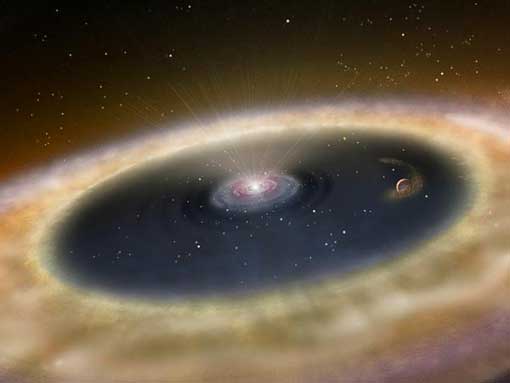
Youngest Planet Picture: Gas Giant Seen in Throes of Creation... Baby world likely "deep red" to human eyes due to heat of formation.
A new picture of a Jupiter-like world swaddled in gas and dust is a direct image of what may be the youngest planet yet seen, astronomers report.
The newborn gas giant, dubbed LkCa 15b, orbits a sunlike star 450 light-years away in the northern constellation Taurus. The planet orbits inside a disk of material around the star that's no more than two million years old. By contrast, astronomers estimate our solar system is 4.6 billion years old.
The big baby planet may be up to six times the mass of Jupiter, according to theory-based calculations, and it appears to orbit 11 times farther from its parent star than Earth does from our sun.
The new picture was made in near-infrared light, but "the planet would probably appear a deep red to our eye, since it's still glowing from the heat of being formed," said Adam Kraus, lead study author and an astronomer at the University of Hawaii.
Separating Light From Light
Kraus and colleagues zeroed in on the young star based on previous observations that showed a conspicuous gap in the star's surrounding debris disk.
Such gaps are thought to be telltale signs that massive, newly formed planets are circling inside the disks—a protoplanet's gravity would clear away a wide swath of gas and dust as it accumulates matter. read more »
October is Non-GMO Awareness Month. 89% Americans want clear labels for genetically modified foods..thousands march fr NYC to DC


(quote)
Protesters Demand Honest GMO Labels at Right 2 Know March
The Right to Know Where Food Comes From
[October 1, 2011] Starting today, thousands of Americans will march in protest from New York City all the way to Washington D.C. to demand clear, honest labeling of foods with genetically modified ingredients.
Genetically modified foods are subject to disclosure and labeling requirements in many countries, but currently, United States law does not require food producers to label genetically modified foods sold to consumers as genetically modified. The only way for consumers who prefer not to eat genetically modified foods to avoid GMOs is to buy produce only from farmers they know, carefully research the origins of the food they purchase, or limit themselves to buying only food that either been certified by the USDA as organic or has been voluntarily labeled by its manufacturer and certified by a third party as non-GMO. read more »
Disney World opened 40 yrs ago today: "family amusement park...to walk, sit...relax, stay human, stop swearing, start smiling"



(quote)
Disneyland, the original California park, was groundbreaking in every possible way. Prior to Disneyland’s creation, amusement parks were, by and large, dirty, dangerous places aimed almost exclusively at teenagers. Parents didn’t go on rides, they sat on benches while the kids played. As an animator, Walt Disney had already earned a reputation as a maverick, a rebel genius who was able to sell adult audiences on feature-length cartoons, something his peers had claimed would never work. Disneyland was the culmination of many of Walt’s big dreams, a different kind of park, where parents and children could have fun together. Walt Disney told stories, and Disneyland allowed guests to become a part of those stories.
Walt Disney World History Year by Year read more »
Defunct UARS is the largest NASA satellite to make uncontrolled fall back to earth in years; dangers of orbital space debris...

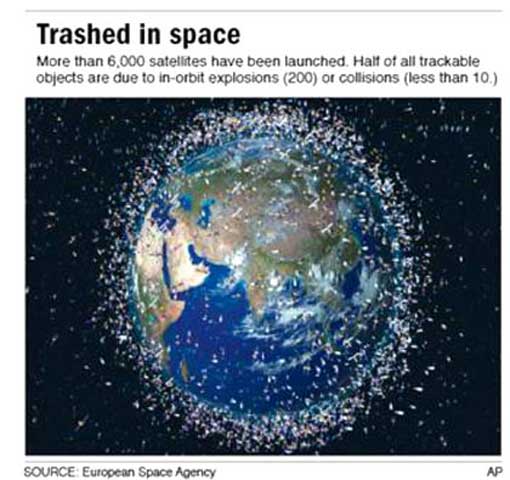
The junk in low Earth orbit: space pollution and rising hazard from debris
(quote)
NASA: 'We May Never Know' Whereabouts of Satellite Debris
NASA scientists are still not sure exactly where pieces of a huge, defunct satellite landed after re-entering Earth's atmosphere this morning, but early evidence suggests that the debris landed somewhere in the Pacific Ocean, which could complicate recovery efforts.
During a Saturday afternoon conference call with reporters, Nicholas Johnson, chief orbital debris scientist for NASA, acknowledged that "we may never know" the whereabouts of the Upper Atmosphere Research Satellite (UARS).
Data from the Department of Defense's Joint Space Operations Center (JSOC) indicate that UARS fell to the Earth sometime between 11:23pm Eastern Friday night and 1:09am Saturday morning. At that point, the satellite passed over Canada, the African continent, and the Pacific, Atlantic, and Indian Oceans. The mid-point of that path, and likely point of entry, according to those calculations, is off the West Coast of the U.S., as indicated by the green circle on a map published by NASA. read more »
World-record holder to attempt 30-mile non-stop scuba dive off California coast to highlight ocean crisis and save marine life
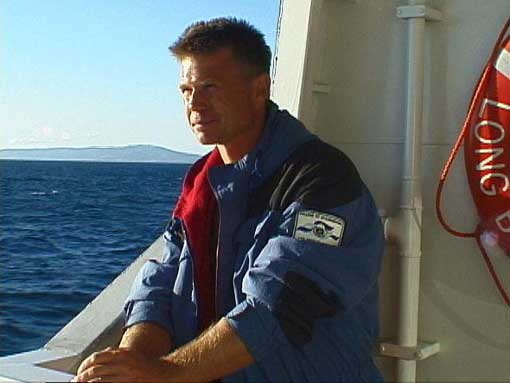
Victoria filmaker Ian Hinkle will shoot undersea footage of Scott Cassell's potentially world-record non-stop dive Saturday, from Catalina Island's avalon Harbor to Los Angeles.
(quote)
Going to great depths to save ocean life
Scott Cassell already holds the record for longest non-stop dive but is ready to break it again while trying to preserve ocean life.
On September 17, the explorer and combat/commercial diver will attempt a 30-mile (48-kilometre) non-stop SCUBA dive from Catalina Island to Los Angeles, gathering information about shark population and what the ocean actually holds, a task that only human effort can accurately collect.
“[The ocean] is where monsters dwell,” says Cassell, who has spent more than 13,000 hours under water in his lifetime, “Where man’s imagination can become reality because it truly does have the most magnificent animals to ever have existed.”
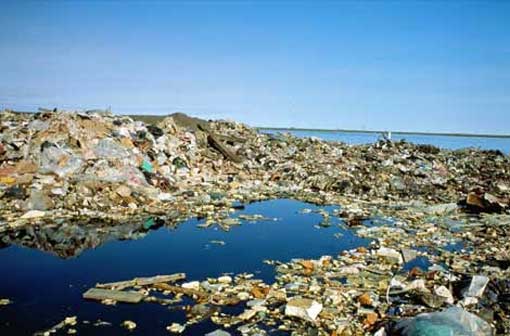
From 1,000 ft. to 3,000 ft., he will be diving through two great white shark strike zones, and an area that has been known to contain very large Mako sharks, to calculate how many sharks there are in Southern California.
Aside from sharks, other dangers Cassell is prepared to face include hypothermia, decompression sickness, extraordinary currents, equipment failure, and physical exhaustion.
For this diver, however, his safety, although important, is not top priority. “Every dive is a mission,” says Cassell. “And the mission is always first.” read more »
Photo of the Day: "I think that there is probably nothing as beautiful as a full disc image of Earth..."
(quote)
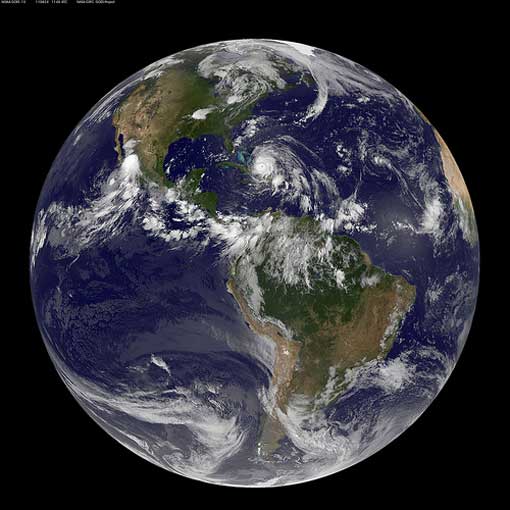
Full Disc Image Shows Hurricane Irene (Photo of the Day)
I think that there is probably nothing as beautiful as a full disc image of Earth, though I would like it if I could find one that didn’t focus on the Americas. Either way, this most recent image was taken on August 24, 2011, by the NASA/NOAA GOES-13 satellite. In the middle of the image can be seen Hurricane Irene as it sweeps in over the Bahamas at 12 miles per hour. To the right is the far west corner of Africa, and you can just see the Antarctic Peninsula down the bottom, reaching up to try and meet the southern tip of South America.
(unquote)
Images courtesy of NASA Goddard Space Flight Center
Contact Us

RSS feed


