You are hereScience & Technology
Science & Technology
Oceans of trash? >9 million volunteers remove 153 million lbs of trash from >312000 miles of coastline and waterways in 26 years


(quote)
New Data Shows What Trash is in Your Ocean and Waterways
New data released by the Ocean Conservancy highlights the need for humans to clean up their acts. The numbers, generated during the 2011 International Coastal Cleanup last September, are staggering.
With 598,076 volunteers around the world who picked up 9,184,428 pounds of trash from 20,776 miles of shorelines, rivers and lakes, it’s not surprising what is the most prolific item found – cigarette butts. If you are wondering how Ocean Conservancy knows down to the last one, how many butts there were, each volunteer is issued an inventory control sheet to keep tabs.
By now you are probably feeling a little ill, seeing just how much junk is floating around and landing on the world’s shores. But what about the damage being done to our wildlife? We know better — they don’t.
Stop Trash at the Source – You read more »


Extreme weather: 2012 kicks off with record heat, tornadoes & drought; 'strange spring' is 'climate change we're seeing'


(quote)
Extreme Weather USA: 2012 Kicks Off With Record Heat, Tornadoes & Drought
Yesterday, a dozen tornadoes ripped through Dallas, spurring panic in a highly populated, 6 million-strong metropolitan area. The footage captured by news helicopters was dramatic—semi trucks and trees were hurled into the air like newspapers tossed from a malevolent paperboy.
But the fleet of Texan tornadoes only marks the latest in a year that has already been packed with extreme weather—we've had record-hot winter months, unusually early tornadoes in the midwest, and states wracked with drought. Here's a closer look.
Tornadoes
There was nothing tremendously out of the ordinary about the tornadoes that hit Dallas, but climatologists were concerned about the spate of twisters that swept through Kentucky, Indiana, and three other states in early March. Those tornadoes killed 39 people and exacted untold property damage to homes and buildings across the region.
And tornado season doesn't usually begin until April, leading climate scientists to link the warmer weather to earlier (and potentially longer) seasons. Here's Joe Romm: read more »
"Deforest to prevent wildfire", "kill barred owl to save another species"...sounds like whalers blaming whales, not overfishing
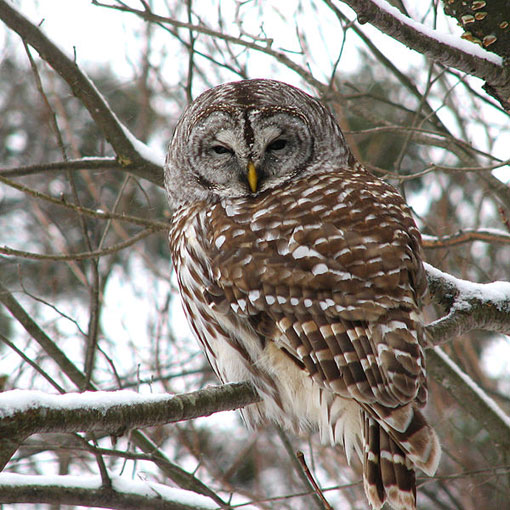
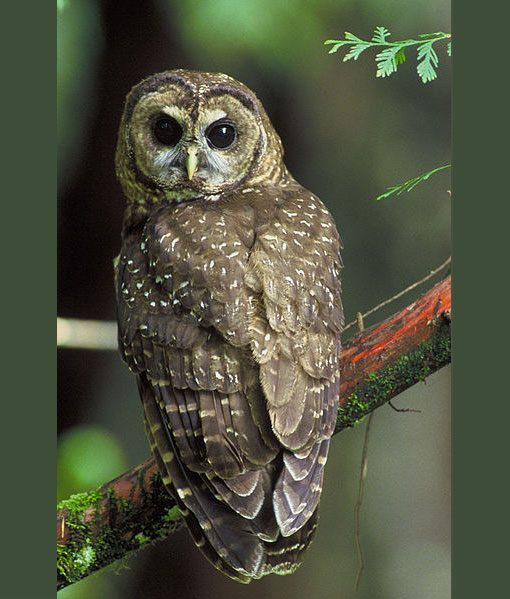
Nature has nature’s law. We humans are just part of Nature. Forests, rather than dead land without trees, supply priceless necessities (shelter, food, oxygen, balanced weather, etc...) for humans... A good example - life in all forms is easily sustained in forests. Wildfires, if not caused by human error, are Nature’s call, and trees will come out the following spring. Sensitive birds (remember they have wings) know full well to fly away from harmful situations, particularly at the onset of smoke when the fire starts... yet unfortunately they can hardly survive without the environment for them to survive – forests... and sadly their speed is no faster than a hunter’s bullet. When mankind appreciates and takes care of Nature, Nature takes care of mankind. Philosophy and science are mostly stemmed from observing nature, and discovering nature’s laws, which make us wiser. As Einstein once said, “look into nature, and you will understand everything better”.

(quote) read more »






Magnificent Planet. 2012 version of Nasa's 'Blue Marble' - Earth space images (composite), taken by new Suomi satellite: Jan 4


(quote)
Last week, NASA released its 2012 version of the famous "Blue Marble" image. By using a planet-pointing satellite, Suomi NPP, the space agency created an extremely high-resolution photograph of our watery world.
The photo centered on the western hemisphere, highlighting North and Central America. It went viral and got even more hits on Flickr than the iconic "Situation Room" photo, taken at the time of the assassination of Osama bin Laden.
Now, responding to public demand, the agency has created a companion image: this time focusing its lens toward the East and showing Africa, Saudi Arabia and India.
The Suomi NPP satellite hugs the Earth too closely to get this kind of image in one shot. It’s in a polar orbit with an altitude of 824 kilometers, but the perspective of the Eastern hemisphere Blue Marble is from 12,743 kilometers away.
As such, Nasa Goddard oceanographer Norman Kuring used images from six different orbits of the satellite over an eight-hour time period on Jan. 23, then stitched the photos together to achieve the final composite. read more »
Strongest solar storm in years, bombarding Earth w/ radiation... aurora borealis that swept across the night sky


(quote)
Jan. 22, 2012 - Solar storm sparks dazzling northern lights
NASA observed a flare Sunday night at 11 p.m. EST Jan. 22, 2012, shows a solar flare erupting on the Sun's northeastern hemisphere, the strongest solar storm in more than six years, bombarding Earth with radiation with more to come. The biggest concern from the speedy eruption is the radiation, which arrived on Earth an hour later and will likely continue through Wednesday. It's mostly an issue for astronauts' health and satellite disruptions. It can cause communication problems for airplanes that go over the poles. Scientists have been expecting solar eruptions to become more intense as the sun enters a more active phase of its 11-year cycle, with an expected peak in 2013. read more »









Contact Us

RSS feed