You are hereScience & Technology
Science & Technology
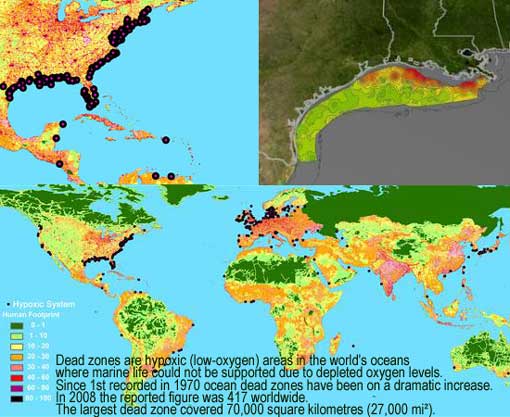
Ocean pollution. Sea "dead zones", oxygen-deprived, fishless: 1st recorded in 1970, 417 in 2008, largest covers 70,000 sq km

A new global study of Earth’s oceans shows a rapid rise in the number of “dead zones” - areas of seafloor with too little oxygen to sustain most marine life. The oxygen-starved waters have proliferated since the 1960s and now rank as one of the world's most pressing environmental problems.

Clocking in at over 8000 square miles (21,000 km2) this year, probably the largest dead zone today stems from the Mississippi River delta in the Gulf of Mexico. This is a site at the confluence of significant farming in the midwest and significant fishing (and shrimping) in the Gulf area. The dead zone spans east to west along the Louisiana and Texas coasts.

Several visible sites with expanding dead zones. Mississippi Delta at the top, with Yangtze River in the bottom left and Pearl River in the bottom right. The dead zones are the tinted clouds swirling at the coastal edge.
 read more »


Methane (greenhouse gas 25x potent as CO2) bubbles out 5x faster. Warmer air thaws Arctic soil, 50 bil tonnes may be released
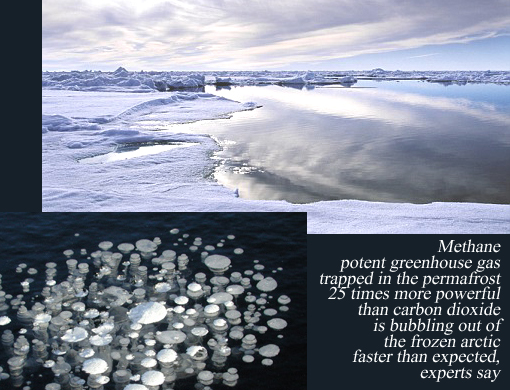
Researchers believe the Arctic Ocean seabed is thawing in patches and releasing greenhouse gases. Methane, trapped in the permafrost, 25 times more powerful than carbon dioxide, is bubbling out of the frozen arctic faster than expected.

Researchers ignite a bubble of methane on Alaska’s Steward Peninsula.

Methane is leaking from the East Siberian Arctic Shelf into the atmosphere at an alarming rate. The amount leaking from this locale is comparable to all methane from rest of the world's oceans put together. Methane is a greenhouse gas more than 30 times more potent than carbon dioxide.

Left: Researcher ignites a pocket of methane. Right: methane bubbles trapped in lake ice in Siberia in early autumn.
(quote) read more »
"Earth and Nature suffer grave ruin, destruction instead of construction, when Technology is in the hands of Greed." - LuCxeed
Earth and Nature suffer grave ruin, destruction instead of construction, when Technology is in the hands of Greed.
Giant iceberg, 965sqmi (2500sqkm, 400m thick) split fr Antarctica, holding "enough water to fill River Thames 100 times."
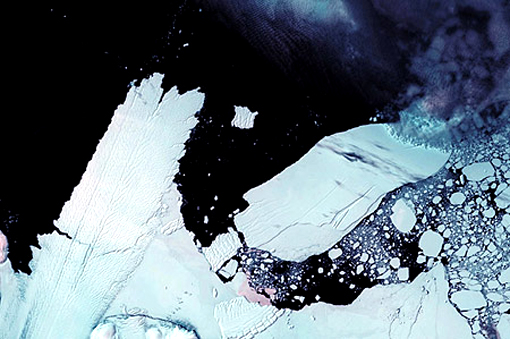
An giant iceberg has broken off from Antarctica, created when it was hit by another iceberg two weeks ago. The size of Luxemberg, it could disrupt ocean circulation patterns.
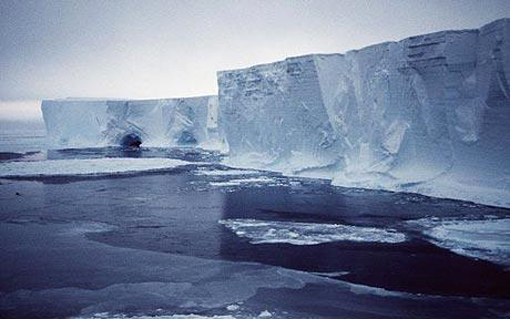
The 965 sq mile (2,500 sq km) block of ice broke off from the Mertz Glacier which ends in a floating tongue of ice that protrudes 100 miles (160 km) out into the Southern Ocean. The 'calving' - or splitting of the ice sheet - resulted a collision with another iceberg.
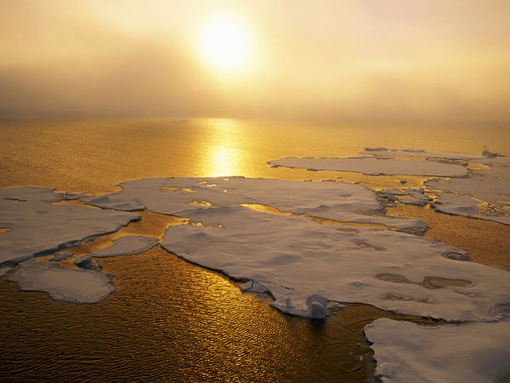
Glaciers are melting, sea levels are rising, cloud forests are drying, and wildlife is scrambling to keep pace. It's becoming clear that humans have caused most of the past century's warming by releasing heat-trapping gases as we power our modern lives. Called greenhouse gases, their levels are higher now than in the last 650,000 years.
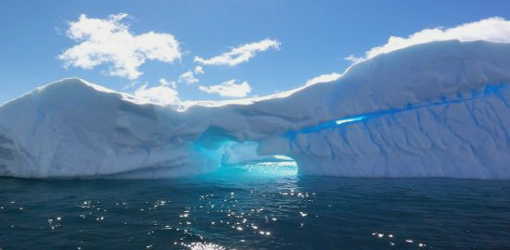
A large iceberg was spotted off an island about halfway between Antarctica and Australia, a rare sight in waters so far north. read more »
"It has become appallingly obvious that our technology has exceeded our humanity." - Albert Einstein
It has become appallingly obvious that our technology has exceeded our humanity.
Pope Benedict XVI: "human dignity must be preserved", criticizing body scanners which Rabbis say violate Jewish women's rights

"Every action, it is above all essential to protect and value the human person in their integrity". "For you this reality represents an ever more task of complex organization and it is a labour that if often discreet and barely known, not always noted but which does not escape the eyes of God, who sees all of Man's works even those that are hidden."
(quote)
The Pope made his comments during an audience with airport workers held at the Vatican. Although the Pontiff did not mention the words body scanner it was clear what he meant as he told the 1,200 strong crowd: "Every action, it is above all essential to protect and value the human person in their integrity.
"Respecting these principles can seem particularly complex and difficult in the present context.
"The economic crisis has had problematic effects on the civil aviation sector, the international terrorist threat which, precisely, has in its line of fire airports and aircraft to realise its destructive schemes. read more »
EU voted down body scanners in 2008: "degrading measure". Concerns: Effective? Health? Dignity? Privacy? Heavy cost?
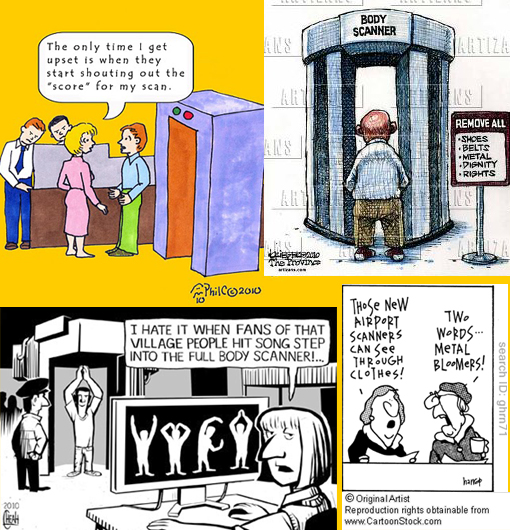

Craziness is not rare, neither is Crime. Else, there would be no need for law, law enforcement, etc. etc.. Does Fear lead to solutions, or to panic, shutting out common sense and wisdom? EU Justice Chief has the answer: "We have to have a very clear line on this. We must never be driven by fear but by our values."
MEPs not yet convinced about body scanners, await impact analysis: "legitimate questions"... "Technology has become the new religion in counter-terrorism"... "Violation of dignity"... "no matter how much technology you have, terrorists will manage to circumvent it"... "great cost implications" of using body scanners, and advised against "putting burdens on airport companies" (also tax payers?) without the certainty that such scanners would be useful.
(quote) read more »
Contact Us

RSS feed